Best Whetstones for Beginners: Grit Guide and Top Picks
Best whetstones for beginners. Compare 1000/6000, 400/1000, and splash-and-go sharpening stones for kitchen knives.

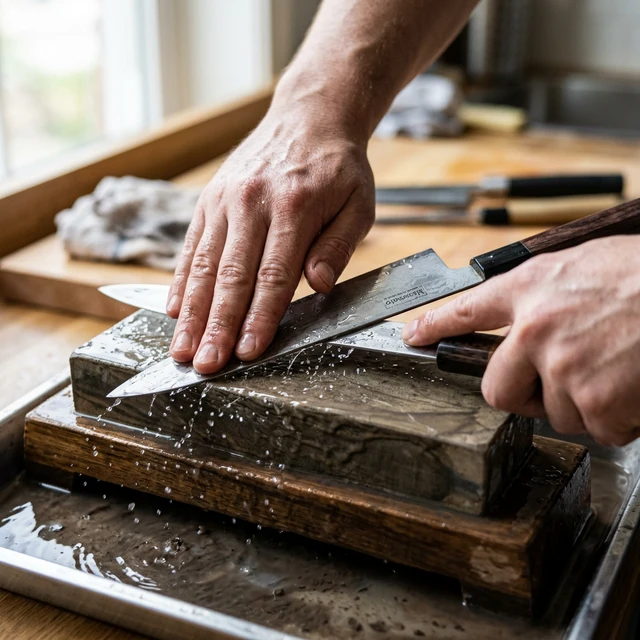
Table of Contents
Affiliate Disclosure: We may earn a commission if you purchase through our links. This doesn't affect our reviews.
Listing check: Amazon titles and photos change. Confirm the steel, length, and model named on this page match the listing before you buy — this is a research note from Nora Whitfield, not a copy of the Amazon product copy.
The best combination whetstone for most beginners is the King KDS 1000/6000. The 1000 grit side does the real sharpening, while the 6000 grit side refines the edge. The stone also gives enough tactile feedback to help new sharpeners hold a steady angle.
If you want less setup, buy the Shapton Kuromaku 1000 instead. It is not a combination stone, but it remains the better choice for cooks who will skip sharpening if they have to soak a stone first.
Quick Picks
| Need | Best pick | Why it fits |
|---|---|---|
| Best combination whetstone overall | King KDS 1000/6000 | Best beginner balance of sharpening grit, polishing grit, feedback, and price |
| Best splash-and-go stone | Shapton Kuromaku 1000 | No soaking, fast cutting, durable surface |
| Best budget combo stone | Sharp Pebble 400/1000 | Useful coarse side for dull knives and entry-level price |
| Best premium stone | Naniwa Professional 1000 | Excellent feel and edge quality for Japanese knives |
| Best repair stone | King Deluxe 300 | Coarse stone for chips, neglected edges, and reprofiling |
A sharp knife is safer, faster, and more enjoyable to use than a dull one. A good whetstone is the single best investment you can make for kitchen knives you want to keep for years. Electric sharpeners and pull-through gadgets work in a pinch, but they remove more metal, give you less angle control, and can shorten a knife's lifespan.
Bottom Line: Start with a 1000/6000 combination whetstone if you want one stone that covers routine sharpening and finishing. Budget 15-20 minutes every 4-8 weeks, and your knives will outperform most factory edges.
Understanding Grit Numbers
Grit numbers indicate the coarseness of the abrasive particles in the stone. Lower numbers mean coarser, more aggressive cutting. Higher numbers mean finer, more polishing action.
- 200-400 grit (Coarse): For repairing chips, fixing damaged edges, or reprofiling a blade to a new angle. You will rarely need this unless you abuse your knives or buy secondhand.
- 1000 grit (Medium): The workhorse grit. Handles all routine sharpening for knives that are maintained regularly. This is where every beginner should start.
- 3000 grit (Fine): Refines the edge left by a 1000 grit stone. This is optional for Western knives but highly useful for harder Japanese steel.
- 6000-8000 grit (Extra Fine/Polishing): Creates a highly polished edge. This is noticeable on Japanese knives, but offers diminishing returns on softer German steel.
For most home kitchens, a 1000/6000 combination stone covers nearly every normal sharpening job. You only need a coarse stone if your knives have chips, rolled edges, or years of neglect.
Key Sharpening Terms to Know
Before selecting a stone or practicing your technique, it helps to understand the terminology. Here are the core definitions that guide freehand knife sharpening:
- A combination whetstone is a dual-sided sharpening block that features a different grit level on each side, allowing for both sharpening and refining in a single tool.
- Grit is the rating system that indicates the particle size of the abrasive material on a whetstone, with lower numbers representing coarser abrasives and higher numbers representing polishing agents.
- Dishing is the concave hollow shape that develops in the center of a whetstone as a result of uneven wear during sharpening, which must be flattened out regularly.
- Splash-and-go is a type of synthetic whetstone that only needs a light spray of water on the surface and does not require pre-soaking in water before use.
- A burr is the thin, raised metal ridge that forms along the apex of the blade during the sharpening process, signaling that the steel has been ground down sufficiently.
- A lapping plate is a highly flat, coarse abrasive plate used specifically to flatten dished whetstones and restore their flat profile.
Combination Whetstone vs Single-Grit Stone
Combination whetstones are convenient because they put two grits in one block. That saves money and storage space, which is why they make sense for beginners. The drawback is that both sides wear at different rates, and many combo stones are softer than premium single-grit stones.
In contrast, single-grit stones are usually more durable and consistent. For example, a Shapton Kuromaku 1000 cuts quickly and stays flat longer than many budget combo stones. But it does not include a polishing side, so you may eventually need to add a 3000, 5000, or 6000 grit stone.
Buy a combination whetstone if you want the lowest-cost complete setup. Buy a single premium 1000 grit stone if you value speed, durability, and lower maintenance.
Our Top 5 Picks
This guide weighs beginner-friendly whetstones by the factors that matter for home cooks: setup time, feedback, cutting speed, flattening needs, included base, and whether the stone is forgiving while you learn angle control. Starting with the right stone reduces the learning curve significantly.
1. King KDS 1000/6000 Combo Stone - Best Combination Whetstone
The King KDS has been the default recommendation for beginners for good reason. It offers excellent feedback because you can feel the stone gripping the blade, which helps you maintain a consistent angle. The 1000 side cuts efficiently without being overly aggressive, and the 6000 side produces a pleasantly refined edge.
It requires 5-10 minutes of soaking before use and dishes, or wears hollow, faster than premium stones. That means you will need to flatten it more often. The upside is that the softer feel gives beginners useful feedback, and the included plastic base holds the stone securely during use.
Pros: Excellent tactile feedback, affordable, dual-sided, widely available Cons: Requires soaking, dishes faster than premium options, base is basic
King KDS 1000/6000 Combination Whetstone
2. Shapton Kuromaku 1000 - Best Splash-and-Go
If soaking a stone for 10 minutes feels like a barrier, the Shapton Kuromaku is your answer. Splash water on it, and you are ready to sharpen. It cuts aggressively for a 1000 grit stone, which means faster sharpening sessions.
The Shapton comes in a plastic storage case that doubles as a sharpening base. It is harder than the King, so it dishes more slowly, but the feedback is less pronounced, which can make angle holding trickier for absolute beginners.
Pros: No soaking required, fast cutting, durable, clever case/base design Cons: Less feedback than softer stones, single-sided
Shapton Kuromaku 1000 Grit Whetstone
3. Sharp Pebble 400/1000 Combo - Best Budget
The Sharp Pebble 400/1000 is a capable low-cost setup. The 400 side handles dull knives and minor chip repair, while the 1000 side manages routine sharpening. It often comes with a bamboo base and an angle guide. The guide is not a substitute for learning angle control, but it can help a true beginner understand the starting position.
The tradeoff is consistency. Some batches feel slightly softer or harder than others, and it dishes more quickly than the King or Shapton. For someone testing the waters before committing to more expensive stones, it is adequate.
Pros: Affordable, dual-sided with useful grit combo, often includes a base Cons: Quality consistency varies, dishes quickly, no fine finishing grit
Sharp Pebble 400/1000 Whetstone
4. Naniwa Professional 1000 - Best for Japanese Knives
The Naniwa Professional is the stone to buy when you already know you like freehand sharpening. It is splash-and-go, offers strong feedback, and produces excellent edge quality. The feel during sharpening is distinctive, and the stone generates a useful slurry that improves cutting action.
For a single-sided stone, it is a harder sell for beginners on a budget. Nevertheless, if you own Japanese knives with harder steel, the Naniwa's feedback and cutting quality make it worth the premium.
Pros: Excellent feel and feedback, splash-and-go, strong edge quality, durable Cons: Single-sided, more expensive, may be overkill for entry-level knives
Naniwa Professional 1000 Grit Whetstone
5. King Deluxe 300 - Best for Damaged Edges
Every sharpener eventually needs a coarse stone for fixing chips, badly neglected edges, or thinning behind the edge. The King Deluxe 300 cuts aggressively but with enough feedback that you can control material removal. Follow the manufacturer's water-use instructions for your exact stone rather than assuming every coarse stone needs a long soak.
You will not need this stone often, but when you do, a normal 1000 grit stone feels painfully slow. Keep it for rescue jobs, then move back to 1000 grit to refine the edge.
Pros: Aggressive but controllable, affordable, excellent for repair work Cons: Too coarse for regular maintenance, dishes quickly, water-use instructions vary by exact stone
King Deluxe 300 Grit Whetstone
Which Whetstone Grit Combo Should You Buy?
| Knife condition | Best grit setup | Why |
|---|---|---|
| Normal home knives, slightly dull | 1000/6000 combo | Handles sharpening and polishing in one stone |
| Very dull but not chipped | 400/1000 combo | Coarse side restores the edge faster |
| Chipped or damaged edges | 300 or 400 grit plus 1000 grit | Coarse repair first, then refine |
| Japanese knives in good condition | 1000 plus 3000-6000 | Harder steel benefits from a refined finishing stone |
| Western stainless knives | 1000 grit alone or 1000/3000 | Softer steel does not need an ultra-polished edge |
Most beginners should not start with a full stone progression. A single 1000/6000 combination whetstone teaches the skill, keeps cost low, and is good enough for everyday cooking.
Basic Sharpening Technique
Here is the simplified technique I teach every beginner:
-
Set your angle: Most Western knives use a 15-20 degree angle per side. Japanese knives typically use 10-15 degrees. A useful trick: stack two pennies on the stone and rest the spine on them. That is roughly 15 degrees for an average chef's knife. If you want to know more about Western blade shapes, check out our guide on essential kitchen knives.
-
Use consistent pressure: Place three fingers of your non-dominant hand on the blade near the edge, directly above the contact point with the stone. Apply moderate, even pressure on the push stroke. Lighten pressure on the pull stroke.
-
Work in sections: Divide the blade into three zones: heel, middle, and tip. Spend 5-10 strokes on each zone before moving to the next. This ensures even sharpening across the entire edge.
-
Check for a burr: After sharpening one side, run your thumb carefully perpendicular across the edge, not along it. You should feel a slight rough ridge, called the burr, on the opposite side. This means you have sharpened enough on that side.
-
Flip and repeat: Sharpen the other side until a burr forms on the first side.
-
Deburr: Make a few light alternating strokes on each side, reducing pressure progressively. Finish with stropping strokes on the fine side of the stone or on a leather strop.
Stone Maintenance
Whetstones dish, meaning they develop a concave hollow in the center from repeated use. A dished stone creates a convex edge on your knife, which defeats the purpose. Flatten your stones regularly using a dedicated lapping plate or a sheet of 120-grit wet/dry sandpaper on a flat surface like a granite tile.
How often depends on how soft your stone is and how frequently you sharpen. The King KDS needs flattening roughly every 3-4 sharpening sessions. The Shapton can go 8-10 sessions between flattenings.
What to Avoid as a Beginner
Pull-through sharpeners: They grind at fixed, aggressive angles and remove excessive metal. Fine for a cheap knife you do not care about, but they will ruin quality blades.
Electric sharpeners: Better than pull-throughs but still remove more metal than necessary and offer limited angle control. Acceptable for German knives in a busy household but not ideal for Japanese steel.
Diamond plates as your only stone: Diamond plates cut extremely fast and never dish, which sounds appealing. But they are aggressive, offer poor feedback, and it is easy to over-sharpen. Better as a flattening tool than a primary sharpening tool for beginners.
Frequently Asked Questions
What grit whetstone should a beginner start with?
Start with 1000 grit. It handles routine maintenance sharpening and mildly dull knives. A 1000/6000 combo stone is the most cost-effective entry point, covering both sharpening and polishing.
Do you need to soak a whetstone before use?
It depends on the stone type. Traditional water stones like King need 5-10 minutes of soaking. Splash-and-go stones like Shapton and Naniwa Professional only need water sprinkled on the surface. Never soak a splash-and-go stone because it can cause cracking.
How often should you sharpen kitchen knives?
Every 4-8 weeks for most home cooks, depending on use. Use a honing steel or ceramic rod between sharpenings to maintain alignment. Your knife should slice a ripe tomato with very little pressure.
Can you sharpen serrated knives on a whetstone?
Not effectively. Serrated knives require a tapered sharpening rod that fits into each individual scallop. A flat whetstone cannot reach the recessed edges. Quality serrated knives hold their edge for years before needing professional attention.
Is a 1000/6000 combo stone enough for home use?
Yes. The 1000 side handles routine sharpening, and the 6000 side adds a refined, polished edge. Add a coarse stone only if you regularly deal with chipped or severely neglected blades.
Final Recommendation
For most readers, the best combination whetstone is still the King KDS 1000/6000. It is affordable, complete, and forgiving enough for learning. Buy the Shapton Kuromaku 1000 if you want a faster, lower-maintenance stone and do not mind adding a finishing stone later.
If you are choosing between this and an electric sharpener, read our best knife sharpener comparison. If you specifically own Japanese knives, pair this buying guide with our Japanese knife sharpening tutorial. For the bigger maintenance picture, see the complete kitchen knife sharpening guide.
Sources
Nora Whitfield
Writer, Kitchenware Authority
Nora Whitfield writes Kitchenware Authority's reviews and buying guides. Every knife, pan, and appliance is vetted against maker specifications, materials and safety documentation, and the long-run experience verified home cooks report — not first-hand lab tests.
Upgrade Your Kitchen Skills
Get research-based gear reviews, maintenance tips, and buying guides from the Kitchenware Authority desk.
No spam. Research notes from Nora Whitfield, not invented reader counts.