KitchenAid vs. Cuisinart: Which Stand Mixer Reigns Supreme?
A head-to-head comparison of the two titans of the baking world. We tested torque, noise levels, and durability to pick a winner.

verified Chef Tested
Hands-on tested by professional chefs
toc Table of Contents
Affiliate Disclosure: We may earn a commission if you purchase through our links. This doesn't affect our reviews.
When it comes to stand mixers, KitchenAid has dominated the kitchen counter for nearly a century. The Artisan is the most recognizable kitchen appliance in the world. However, in recent years, Cuisinart has emerged as a serious challenger, offering more power and features at a lower price point.
We tested both mixers side-by-side across two months of heavy baking. Here’s what we found.
Performance Comparison
Creaming Butter and Sugar
Both mixers performed well here. The KitchenAid’s planetary action (where the beater orbits the bowl while spinning on its own axis) produced slightly more even mixing. The Cuisinart required one or two stops to scrape the bowl, while the KitchenAid reached most of the butter without intervention.
Winner: KitchenAid, by a small margin.
Kneading Heavy Bread Dough
This is where the power difference becomes noticeable. The Cuisinart SM-50’s 500-watt motor handled a double batch of whole wheat bread dough without slowing down. The KitchenAid Artisan’s 325-watt motor struggled slightly with the same load, and the mixer began “walking” across the counter during the final minutes of kneading.
For single batches of bread dough, both perform fine. For double batches or very stiff doughs (bagels, pizza dough), the Cuisinart has a meaningful advantage.
Winner: Cuisinart.
Whipping Egg Whites
Both mixers whipped 4 egg whites to stiff peaks in roughly the same time (about 3 minutes on high speed). The KitchenAid’s flat beater covered the bowl more efficiently, incorporating slightly more air. Practically, the difference is minimal for home baking.
Winner: Tie.
Noise Level
The KitchenAid runs noticeably quieter at every speed setting. The Cuisinart produces a higher-pitched whine at speeds 8-12 that can be grating during long mix times. If you bake late at night or in an open-plan living space, this matters.
Winner: KitchenAid.
The Icon: KitchenAid Artisan
The KitchenAid Artisan remains the king of versatility. Its planetary mixing action is proven, and the sheer ecosystem of 15+ optional attachments makes it more than just a mixer. You can add a pasta roller, meat grinder, ice cream maker, grain mill, or spiralizer. No other mixer brand offers this depth of expandability.
The tilt-head design makes adding ingredients easy, and the 5-quart bowl handles most home baking recipes. Available in 40+ colors, it’s also a kitchen design statement.
Price: ~$350
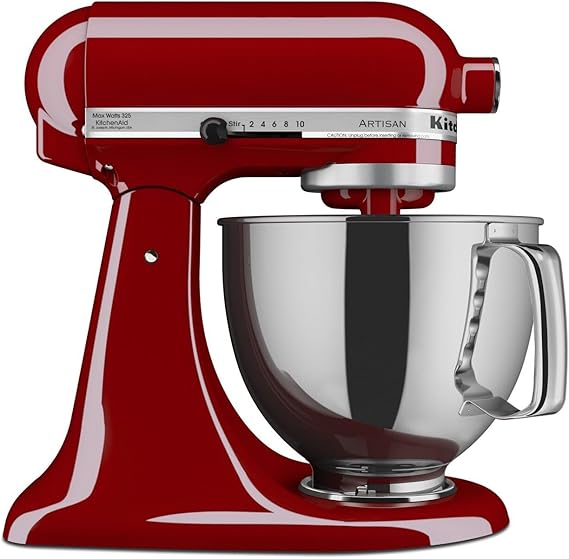
KitchenAid Artisan Series 5-Quart Tilt-Head Stand Mixer
KitchenAid
The undisputed icon of the home kitchen, versatile enough for everything from whipped cream to heavy bread dough.
The Challenger: Cuisinart Precision Master
Cuisinart offers a 500-watt motor compared to KitchenAid’s 325 watts. While wattage alone isn’t everything (torque and gearing matter more), the Cuisinart does handle double batches and stiff doughs with noticeably less strain. The 5.5-quart bowl is slightly larger than the KitchenAid’s 5-quart.
The Cuisinart also includes a splash guard and a 12-speed dial that’s easier to read than KitchenAid’s lever. At ~$200, it’s nearly half the price of the Artisan.
Price: ~$200
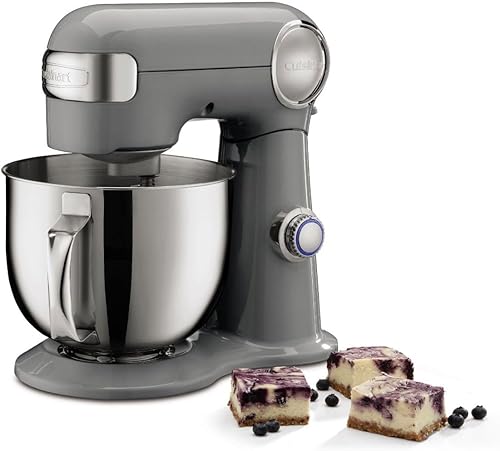
Cuisinart Precision Master 5.5-Quart Stand Mixer (SM-50)
Cuisinart
A feature-rich and powerful alternative to the classic KitchenAid at a competitive price point.
Build Quality and Longevity
The KitchenAid Artisan uses a die-cast zinc body that weighs just over 22 pounds. This heft keeps it planted during heavy mixing and signals serious build quality. KitchenAid has been making essentially the same mixer design since the 1930s, and repair parts are available for models that are decades old. The motor is gear-driven, not belt-driven, which means smoother torque delivery and fewer points of failure.
The Cuisinart SM-50 uses a die-cast metal body that feels substantial but weighs less at about 18 pounds. It hasn’t been on the market long enough to establish the same decades-long durability track record, but early reports from heavy users are positive. Cuisinart’s 3-year warranty is shorter than KitchenAid’s 5-year limited warranty.
Attachment Ecosystem
This is where KitchenAid pulls away from every competitor. The front power hub accepts over 15 attachments: pasta rollers, pasta extruders, meat grinders, food processors, spiralizers, grain mills, juicers, ice cream makers, and more. If you buy a KitchenAid, you’re buying a platform, not just a mixer.
Cuisinart offers a few basic attachments (meat grinder, pasta roller) but the selection is limited compared to KitchenAid’s extensive catalog. If you only plan to mix, knead, and whip, this doesn’t matter. If you want a multi-functional kitchen hub, KitchenAid is the clear choice.
The Verdict
Get the KitchenAid if: You want a design icon that will last 30 years, plan to use attachments (pasta, meat grinding, ice cream), or value quieter operation. The Artisan is a premium product that holds its value — used KitchenAids sell for 60-70% of retail, which is unusual for kitchen appliances.
Get the Cuisinart if: You want the most mixing power for your dollar, primarily bake bread, or don’t care about the attachment ecosystem. At half the price of a KitchenAid, the mixing performance per dollar is remarkable.
For most home bakers, the KitchenAid Artisan is still the better long-term investment because of its build quality, attachment ecosystem, and proven 30-year track record. But the Cuisinart SM-50 is currently the best value in stand mixers.
Related Guides: For more recommendations, see our best stand mixers for home bakers. Planning to bake? Check out our essential bakeware for beginners.
Marcus Chen
Senior Kitchen Equipment Editor• Culinary Institute of America graduate • Former sous chef, Atelier Crenn SF • 3 years experience in Kyoto kaiseki kitchens
Marcus Chen is a professional cook and kitchen equipment specialist with 15 years of hands-on experience across restaurant kitchens in San Francisco and Tokyo. He has worked alongside Japanese bladesmiths in Sakai and Seki, trained in classical French technique, and spent three years cooking kaiseki in Kyoto. At Kitchenware Authority, Marcus leads all product testing and editorial standards — every recommendation passes through his kitchen before it reaches yours.
Upgrade Your Kitchen Skills
Get chef-tested gear reviews, maintenance tips, and exclusive buying guides delivered to your inbox.
Join 15,000+ home cooks. No spam, ever.