Shun vs Miyabi: Which Japanese Knife Brand Is Better?
A head-to-head comparison of two premium Japanese knife brands. We compare steel, craftsmanship, handle design, and value across their most popular models.

verified Chef Tested
Hands-on tested by professional chefs
toc Table of Contents
Affiliate Disclosure: We may earn a commission if you purchase through our links. This doesn't affect our reviews.
Shun and Miyabi are two of the most recognizable Japanese knife brands in the Western market. Both are made in Seki, Japan — the country’s blade-making capital. Both produce beautiful, sharp knives. But they take meaningfully different approaches to steel, handle design, and pricing.
This comparison covers what actually matters once you get past the marketing.
Brand Overview
| Shun | Miyabi | |
|---|---|---|
| Parent Company | KAI Corporation (Japan) | Zwilling J.A. Henckels (Germany) |
| Factory | Seki, Japan | Seki, Japan |
| Founded | 1908 | 2005 |
| Signature Steel | VG-MAX (60-61 HRC) | SG2 Micro-Carbide (63 HRC) |
| Damascus Layers | 68 layers | 100+ layers (Birchwood) |
| Price Range | $80-$350 | $80-$400 |
| Key Lines | Classic, Premier, Hikari, Kanso | Birchwood SG2, Artisan, Kaizen |
Steel: The Core Difference
This is where the brands diverge most meaningfully.
Shun’s VG-MAX is a proprietary stainless steel hardened to 60-61 HRC. It’s an excellent all-around performer , takes a keen edge, resists corrosion well, and sharpens relatively easily on a whetstone. The trade-off is that it won’t hold its edge quite as long as harder steels.
Miyabi’s SG2 (used in the Birchwood and Artisan lines) is a powder metallurgy steel hardened to 63 HRC. Powder steel produces an incredibly fine grain structure, which means a thinner, sharper edge that lasts longer between sharpenings. The trade-off is that it’s more brittle , lateral stress or prying can chip the edge.
Our take: For home cooks who sharpen regularly (every 2-3 weeks), Shun’s VG-MAX is forgiving and practical. For cooks who want maximum time between sharpenings and treat their tools carefully, Miyabi’s SG2 is the superior steel.
Head-to-Head: Chef’s Knife
Shun Classic 8” Chef’s Knife
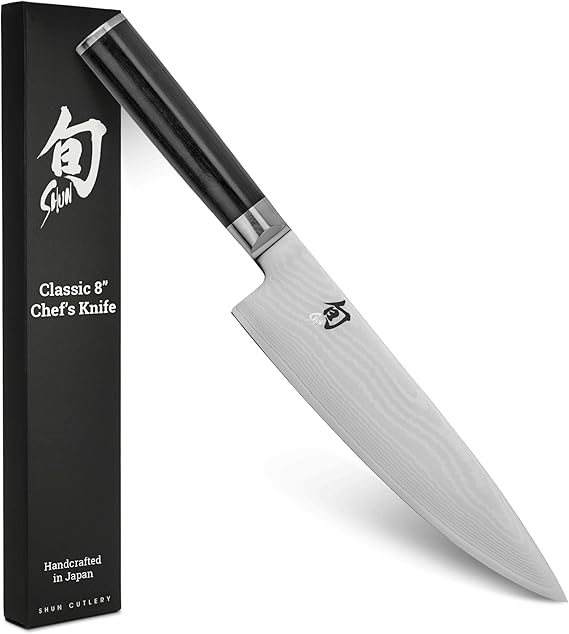
Shun Classic 8" Chef's Knife
Shun
A handcrafted Japanese chef's knife featuring 68 layers of Damascus cladding and a VG-MAX cutting core.
Shun Classic 8' Chef's Knife
~$170
The Shun Classic is the brand’s bestseller for good reason. The D-shaped PakkaWood handle is comfortable for right-handed users, the 68-layer Damascus pattern is gorgeous, and the VG-MAX edge comes shaving-sharp from the factory. It’s the knife that converted millions of home cooks to Japanese steel.
Miyabi Birchwood SG2 8” Chef’s Knife

Miyabi Birchwood SG2 Chef's Knife
Miyabi
The pinnacle of Japanese craftsmanship, featuring SG2 micro-carbide powder steel and a spectacular Karlian birchwood handle.
Miyabi Birchwood SG2 Chef's Knife
~$350
Miyabi’s flagship is a serious piece of cutlery. The 100+ layer Damascus over an SG2 core is functionally and aesthetically impressive. The hand-hammered Tsuchime finish reduces food sticking, and the curly birch handle is unique in the market. This knife performs at a level that punches well above its price.
Verdict: Chef’s Knife
The Miyabi Birchwood SG2 edges out the Shun Classic on pure performance due to its harder steel and finer edge geometry. But the Shun Classic costs $30-50 less and offers a more forgiving steel for daily use. If budget matters, Shun. If performance matters, Miyabi.
Handle Design
Shun uses a traditional Japanese D-shaped handle (in the Classic line) made from PakkaWood. It’s contoured for right-handed users and feels lightweight and traditional. The Premier line uses a Western-style riveted handle with a walnut-colored PakkaWood that’s more ambidextrous.
Miyabi uses a Western-inspired handle across most lines, with the Birchwood series featuring a gorgeous curly birchwood. The FC (Fine Carbide) and Kaizen lines use more traditional contoured designs. Overall, Miyabi handles tend to be slightly heavier and more balanced.
Our take: If you prefer a traditional Japanese handle, Shun Classic is your pick. If you want a Western-style grip from a Japanese-made knife, Miyabi’s handle ergonomics are slightly more refined.
Value Comparison
| Model | Steel | HRC | MSRP | Value Rating |
|---|---|---|---|---|
| Shun Classic 8” | VG-MAX | 61 | $170 | ★★★★★ |
| Shun Kanso 8” | AUS10A | 60 | $130 | ★★★★☆ |
| Miyabi Birchwood 8” | SG2 | 63 | $230 | ★★★★☆ |
| Miyabi Kaizen II 8” | FC61 | 61 | $120 | ★★★★★ |
The Shun Classic and Miyabi Kaizen II represent the best value in their respective lineups. Both deliver excellent performance relative to their price.
Who Should Buy Which?
Buy Shun if you:
- Want a proven, well-supported knife with excellent resale value
- Prefer traditional Japanese handle ergonomics (Classic line)
- Sharpen your knives regularly and value ease of maintenance
- Want a wide range of specialty blade shapes in one consistent line
Buy Miyabi if you:
- Prioritize edge retention above all else
- Prefer Western-style handles on Japanese steel
- Want a knife that will turn heads at a dinner party (Birchwood series)
- Cook carefully and never use your knife on frozen food or bones
Final Verdict
For most home cooks, Shun Classic is the better all-around value. It’s accessible, sharp, forgiving, and widely available. The VG-MAX steel performs brilliantly for daily home cooking.
For knife enthusiasts and serious home cooks who want the best-performing steel, Miyabi Birchwood SG2 is the superior knife. The SG2 edge lasts noticeably longer, and the craftsmanship is objectively a step above.
You can’t go wrong with either brand. The real answer is this: buy whichever one you’ll actually use and maintain.
More Comparisons: See how these brands stack up in our best Japanese knives roundup. For blade shape basics, read gyuto vs santoku. New to Japanese knives? Start here.
Marcus Chen
Senior Kitchen Equipment Editor• Culinary Institute of America graduate • Former sous chef, Atelier Crenn SF • 3 years experience in Kyoto kaiseki kitchens
Marcus Chen is a professional cook and kitchen equipment specialist with 15 years of hands-on experience across restaurant kitchens in San Francisco and Tokyo. He has worked alongside Japanese bladesmiths in Sakai and Seki, trained in classical French technique, and spent three years cooking kaiseki in Kyoto. At Kitchenware Authority, Marcus leads all product testing and editorial standards — every recommendation passes through his kitchen before it reaches yours.
Upgrade Your Kitchen Skills
Get chef-tested gear reviews, maintenance tips, and exclusive buying guides delivered to your inbox.
Join 15,000+ home cooks. No spam, ever.