Stainless Steel Wok vs Carbon Steel Frying Pan: Which Is Better for Stir-Fry?
Stainless steel wok vs carbon steel frying pan, compared by heat response, seasoning, capacity, induction fit, cleanup, and stir-fry usefulness.

Editorial Review
Independent, research-driven reviews by our editorial team
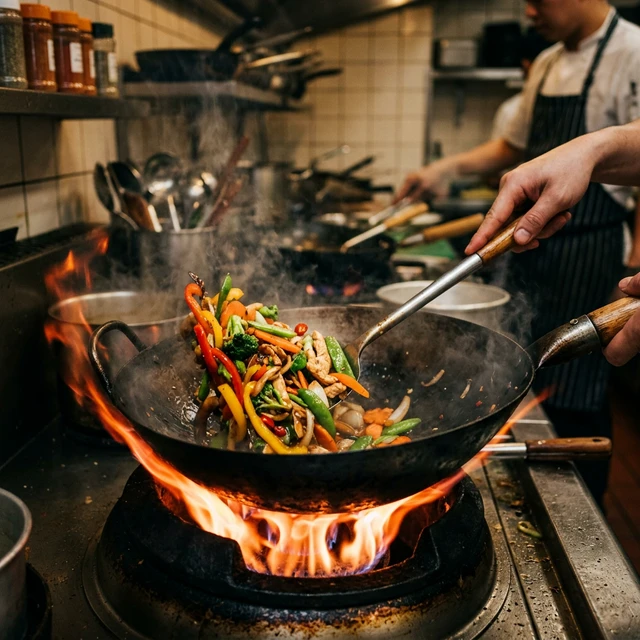
Table of Contents
Affiliate Disclosure: We may earn a commission if you purchase through our links. This doesn't affect our reviews.
Listing check: Amazon titles and photos change. Confirm the steel, length, and model named on this page match the listing before you buy — this is a research note from Nora Whitfield, not a copy of the Amazon product copy.
Affiliate Disclosure: Kitchenware Authority is an Amazon Associate. We earn from qualifying purchases at no extra cost to you. This helps support our independent research and chef-reviewed guides.
Choosing between a stainless steel wok vs carbon steel frying pan is really a shape question plus a material question. The stainless wok gives you bowl capacity and easy cleanup. The carbon steel frying pan gives you direct burner contact, fast heat response, and a seasoning surface that improves with use.
For most stir-fry-focused cooks, a dedicated carbon steel wok is still the best answer. But if you are deciding between these two specific pieces, the carbon steel frying pan is usually the better everyday buy.
Bottom line: Choose the carbon steel frying pan for small-batch stir-fry, searing, eggs after seasoning, and one-pan weeknight cooking. Choose the stainless steel wok for steaming, braising, deep-frying, acidic sauces, and dishwasher-friendly cleanup.
Quick Comparison
| Feature | Carbon steel frying pan | Stainless steel wok |
|---|---|---|
| Best use | Small-batch stir-fry, searing, everyday skillet work | Steaming, braising, deep-frying, saucy dishes |
| Shape | Wide flat cooking surface | Deep bowl with flared sides |
| Heat response | Fast | Moderate, depends on construction |
| Seasoning | Required | Not required |
| Sticking | Improves as seasoning builds | Technique-dependent |
| Acidic foods | Avoid long acidic cooking on young seasoning | Good fit |
| Induction fit | Usually strong if base is flat | Depends on base and magnetic construction |
| Cleanup | Hand wash, dry, oil lightly | Usually easier |
Stir-Fry Performance
A carbon steel frying pan can perform surprisingly well for stir-fry on a home stove. The flat base gives direct heat contact, and the low sides make it easy to evaporate moisture quickly. That is useful when you are cooking one or two servings of fried rice, vegetables, or sliced protein.
The limitation is capacity. A skillet cannot hold a tall pile of greens or let you push cooked food up the sides the way a wok can. If you overload it, food steams instead of sears.
A stainless steel wok has more volume and taller walls, but stainless steel is not the most responsive wok material. It can be excellent for steaming, braising, boiling noodles, and saucy dishes. For dry high-heat stir-fry, carbon steel usually has the advantage.
Seasoning and Cleanup
Carbon steel needs care. Wash it, dry it over heat, and wipe on a very thin film of oil before storage. That sounds fussy until it becomes habit. The benefit is a surface that gets more protective and more release-friendly with regular cooking.
Stainless steel is much easier. It does not rust easily, does not need seasoning, and handles acidic sauces without worry. The tradeoff is sticking: stainless can cook beautifully, but it needs proper preheating and enough oil.
If you dislike cookware maintenance, buy stainless. If you like the idea of a pan that improves over time, buy carbon steel.
Induction and Stove Fit
On induction, flat contact matters. A carbon steel frying pan usually has a broad, flat base, so it often couples well with an induction burner. A stainless wok can also work, but only if the base is flat and the manufacturer lists induction compatibility.
If your main query is "induction wok," the safest first choice is still a flat-bottom carbon steel wok from a brand that clearly lists induction support, or a stainless stir-fry pan from a manufacturer that publishes induction specs.
What to Buy
Choose a carbon steel frying pan if you want one pan that can stir-fry in small batches, sear meat, cook eggs after seasoning, and move from stove to oven when the maker allows it.
Check current de Buyer Mineral B carbon steel pan price
Choose a carbon steel wok instead if your real goal is fried rice, noodles, and stir-fry for more than one or two people.
Check current Craft Wok flat-bottom carbon steel wok price
Choose a stainless steel stir-fry pan if you want a lower-maintenance bowl-shaped pan for steaming, braising, deep-frying, and acidic sauces.
Check current Cuisinart stainless stir-fry pan price
Verdict
If this is your first serious stir-fry tool, buy a flat-bottom carbon steel wok from the wok buying guide. If you specifically want one pan that also handles Western cooking, choose the carbon steel frying pan. It is more versatile than a stainless wok for searing and small-batch high-heat cooking.
The stainless steel wok is still useful, but it is more of a deep, easy-care cooking vessel than a classic high-heat wok. That is not a failure. It is just a different job.
Sources Checked
- de Buyer Mineral B carbon steel frying pan
- Craft Wok flat-bottom hand-hammered carbon steel wok
- Made In carbon steel wok
- Cuisinart Chef's Classic stainless 14-inch stir-fry pan
- All-Clad woks and chef pans
Frequently Asked Questions
Can you stir-fry in a carbon steel frying pan instead of a wok?
Yes, especially for one or two servings. Use high heat, cook in batches, and avoid overcrowding. For larger batches, a wok shape gives you more room.
Is a stainless steel wok better than a carbon steel frying pan?
Only for certain jobs. Stainless steel woks are better for steaming, braising, deep-frying, and acidic sauces. Carbon steel frying pans are better for searing, small-batch stir-fry, and everyday skillet cooking.
Do stainless steel woks need seasoning?
No. Stainless steel does not need seasoning. It is easier to maintain, but it will not become naturally slick like seasoned carbon steel.
Which is better for induction?
A flat carbon steel frying pan usually makes strong induction contact. A stainless steel wok can also work if it has a flat base and induction-compatible construction. Always confirm the exact product specs.
Nora Whitfield
Writer, Kitchenware Authority
Nora Whitfield writes Kitchenware Authority's reviews and buying guides. Every knife, pan, and appliance is vetted against maker specifications, materials and safety documentation, and the long-run experience verified home cooks report — not first-hand lab tests.
Upgrade Your Kitchen Skills
Get research-based gear reviews, maintenance tips, and buying guides from the Kitchenware Authority desk.
No spam. Research notes from Nora Whitfield, not invented reader counts.