Are Ceramic Pans Safe? Ceramic vs Teflon Safety Guide
Are ceramic pans safe? Compare ceramic nonstick vs Teflon/PTFE cookware, PFAS concerns, overheating risks, scratches, lifespan, and safer use tips.

Editorial Review
Independent, research-driven reviews by our editorial team
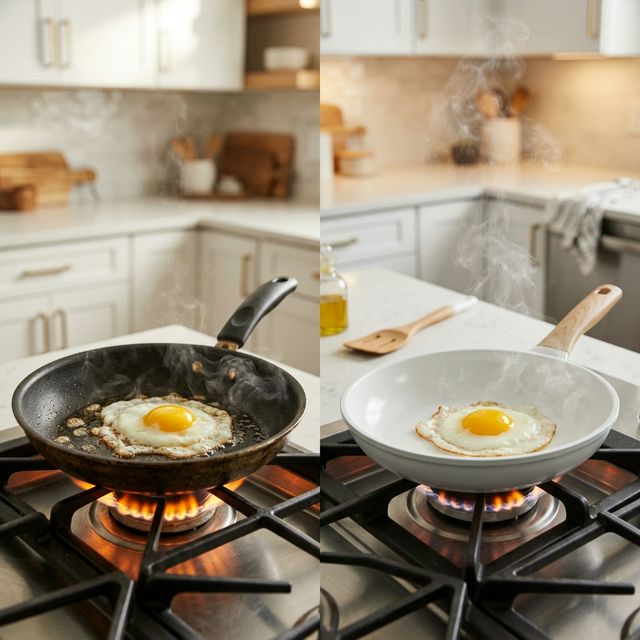
Table of Contents
Affiliate Disclosure: We may earn a commission if you purchase through our links. This doesn't affect our reviews.
Listing check: Amazon titles and photos change. Confirm the steel, length, and model named on this page match the listing before you buy — this is a research note from Nora Whitfield, not a copy of the Amazon product copy.
Are ceramic pans safe? For normal home cooking, yes: a well-made ceramic nonstick pan is generally safe when you use medium heat, avoid metal utensils, and replace it when the coating is worn. Ceramic is not automatically "healthier" than every other pan, but it is a good option if you want a nonstick surface without PTFE-based coatings.
The important distinction is this: most ceramic nonstick cookware is not solid ceramic. It is usually an aluminum or stainless pan with a silica-based sol-gel coating. That coating is different from traditional pottery glaze, and it is also different from PTFE, the fluoropolymer used in Teflon-style pans.
Quick answer: Ceramic pans are safe for eggs, pancakes, fish, low-oil cooking, and everyday stovetop use. They are most appealing if you want a PFAS-free nonstick option. PTFE/Teflon pans can also be safe when used correctly, but they should not be preheated empty or used for high-heat searing.
Across aggregated owner reviews, ceramic pans are easiest to recommend for low-heat eggs and delicate fish, while PTFE pans keep their slick release longer after repeated washing. That pattern shapes the recommendation here: ceramic is the safety-first nonstick choice, but not always the best value choice.
If you are comparing specific buying options, start with our guide to the best ceramic nonstick pans and our broader nonstick pan safety guide.
Are Ceramic Pans Safe for Everyday Cooking?
Ceramic pans are safe for everyday cooking when the coating is intact and the pan is used within the maker's instructions. That means low to medium heat, a small amount of oil or butter, silicone or wood utensils, and hand washing instead of aggressive dishwasher cycles.
The safety advantage is mostly about what ceramic nonstick does not contain. True ceramic nonstick does not rely on PTFE for release, so it avoids the main PFAS-based coating family used in many traditional nonstick pans. The FDA explains that PFAS food-contact uses vary by application, and that polymerized nonstick cookware coatings have shown negligible migration to food when properly manufactured. Still, many buyers prefer to avoid PFAS-based cookware entirely, which is where ceramic earns its place.
Ceramic does have one practical downside: the coating usually wears faster. If you want the longest-lasting slick surface, PTFE usually wins. If you want a coating that avoids PTFE and handles accidental heat mistakes with more margin, ceramic is the better fit.
Ceramic nonstick is a silica-based coating applied to a metal pan for food release. PTFE is polytetrafluoroethylene, the fluoropolymer behind many Teflon-style nonstick coatings. PFAS are a large family of fluorinated chemicals; PTFE belongs to that broader chemistry family, while ceramic nonstick is marketed as PFAS-free when the coating is genuine.
Ceramic vs Teflon Safety: The Practical Difference
Here is the short version for real kitchens.
| Situation | Ceramic nonstick | PTFE/Teflon nonstick | Best move |
|---|---|---|---|
| Eggs, pancakes, fish | Safe and effective | Safe and very slick | Either works |
| Low to medium heat | Recommended | Recommended | Use coated pans here |
| Empty pan preheated on high | More forgiving, but still bad for the pan | Avoid; overheating can create fumes | Do not preheat coated pans empty |
| High-heat searing | Not ideal for coating life | Not recommended | Use cast iron, carbon steel, or stainless |
| Scratched or flaking coating | Replace when worn | Replace when scratched, peeling, or chipped | Retire damaged coated pans |
| Pet birds in the home | Lower PTFE-fume concern | Extra caution needed | Keep birds away from cooking fumes |
Poison Control notes that PTFE is generally safe, but that Teflon-style coatings can start to break down above about 500 degrees F and release fumes if overheated. The same guidance recommends ventilation, avoiding empty-pan preheating, and replacing damaged cookware.
Ceramic nonstick does not remove every cookware concern. A cheap pan can still have poor manufacturing quality, exposed aluminum after coating failure, weak handles, or misleading marketing. But for the central "ceramic vs Teflon" safety question, ceramic is the simpler choice if avoiding PTFE/PFAS is your main priority.
What Ceramic Nonstick Actually Means
"Ceramic" can mean three different things in cookware:
- Ceramic nonstick coating: The common modern category. A metal pan is coated with a silica-based sol-gel finish.
- Solid ceramic cookware: Less common for frying pans; usually heavier and more fragile.
- Ceramic glaze on pottery or bakeware: A separate category where lead and cadmium standards matter.
This article is about ceramic nonstick coating. It is not the same thing as old ceramic pottery glaze. That distinction matters because a lot of online safety confusion mixes those categories together.
For a deeper buying comparison, see ceramic vs nonstick cookware and our ceramic nonstick care guide.
Do Ceramic Pans Contain PFAS?
True ceramic nonstick coatings should not contain PTFE, PFOA, or other PFAS as the nonstick surface. Most reputable ceramic cookware brands label their pans as PFAS-free, PTFE-free, and PFOA-free.
Do not rely on the word "non-toxic" by itself. It is a marketing phrase, not a technical coating description. Look for a clear PFAS-free claim, the coating type, and care instructions that match ceramic nonstick. If a product page is vague, choose a brand that gives more detail.
The FDA's PFAS food-contact page is useful context here: it separates nonstick cookware coatings from other PFAS uses, and explains that paper grease-proofing agents were the bigger food-contact concern that has been phased out of the U.S. market. EPA also documents the phaseout of PFOA and related long-chain PFAS from emissions and product content under the 2010/2015 stewardship program, while noting that some imported articles or old stocks can still be a concern.
Sources:
- FDA: Authorized Uses of PFAS in Food Contact Applications
- FDA: Questions and Answers on PFAS in Food
- EPA: 2010/2015 PFOA Stewardship Program
- Poison Control: Protect Yourself From Teflon Flu
Can Ceramic Pans Cause Cancer?
There is no good evidence that an intact ceramic nonstick pan causes cancer during normal cooking. The more accurate concern is broader PFAS exposure from the environment and from certain consumer or industrial uses. Ceramic nonstick is popular because it lets buyers avoid PTFE-based coatings in the pan itself.
Avoid absolute claims like "all ceramic cookware is chemical-free" or "Teflon causes cancer when you cook eggs." Those claims are too broad. A better framing is:
- Ceramic nonstick is a practical PFAS-free choice when verified by the manufacturer.
- Modern PTFE cookware is designed for low to medium heat.
- Overheating PTFE is the main acute home-use risk.
- Damaged coated cookware should be replaced regardless of coating type.
What Happens If a Ceramic Pan Is Scratched?
A small surface scratch is usually a performance problem before it is a health emergency. The bigger issue is that scratches make food stick, encourage more scrubbing, and speed up coating failure.
Replace a ceramic pan when:
- The coating is peeling or flaking.
- You can see exposed base metal.
- Food sticks even with oil on medium heat.
- The pan has warped and no longer sits flat.
- The handle or rivets are loose.
Use silicone, nylon, or wooden tools. If you are deciding between tool materials, our guide to wooden vs silicone utensils explains which ones are gentlest on coatings.
How Long Do Ceramic Pans Stay Nonstick?
Most ceramic pans stay satisfyingly nonstick for 1 to 3 years, depending on heat, cleaning, and how often you use them. PTFE pans usually hold their slickness longer under the same use.
In our experience, the first visible decline is usually not a dramatic failure. Eggs start needing more butter, fried rice leaves more residue, and the pan takes more sponge work after sauces. That lifespan gap matters for both cost and sustainability. A ceramic pan that feels safer but needs replacement every year may not be the best value for a heavy-use kitchen. A careful cook who uses medium heat and hand washes can stretch ceramic much longer.
For more detail, see how long ceramic pans stay nonstick.
When Ceramic Is the Right Choice
Choose ceramic if you:
- Want a PFAS-free nonstick coating.
- Cook mostly eggs, pancakes, fish, vegetables, and low-oil meals.
- Use low to medium heat.
- Do not mind replacing the pan sooner than PTFE.
- Want simpler safety rules for a shared household.
Ceramic is not the right tool for ripping-hot steak sears, broiling, or dry high-heat preheating. Use stainless steel, carbon steel, or cast iron for that work.
When PTFE/Teflon Still Makes Sense
Choose PTFE if you:
- Want the slickest and longest-lasting nonstick performance.
- Cook carefully on low to medium heat.
- Never preheat coated pans empty.
- Replace pans when scratched, peeling, or warped.
- Want a lower cost per year of nonstick performance.
This is why the choice is not as simple as "ceramic good, Teflon bad." It is a tradeoff between coating chemistry, heat tolerance, performance, and lifespan.
If you want alternatives, compare our picks for the best nonstick pans without Teflon and the best oven-safe nonstick pan sets.
Safe Use Checklist
Use this checklist for any coated nonstick pan:
- Cook on low to medium heat.
- Add food, oil, or butter before the pan gets extremely hot.
- Do not broil coated nonstick pans.
- Keep the kitchen ventilated.
- Use silicone, nylon, or wooden utensils.
- Hand wash with a soft sponge.
- Avoid aerosol cooking sprays unless the maker allows them.
- Replace pans with peeling, flaking, or deep scratches.
For households with pet birds, be especially cautious with any PTFE-coated cookware or PTFE-coated oven liners. Poison Control notes that birds are highly sensitive to polymer fumes.
Final Verdict
Ceramic pans are safe for normal cooking and are a strong choice if your goal is PFAS-free nonstick. They are not magic, and they are usually less durable than PTFE, but they answer the main searcher's question clearly: yes, ceramic pans are safe when made by a reputable brand and used with basic coated-pan care.
For the safest long-term kitchen, keep one ceramic nonstick pan for delicate foods and use stainless steel, cast iron, or carbon steel for high-heat cooking. That gives you nonstick convenience without forcing every meal through a coated pan.
Frequently Asked Questions
Are ceramic pans safe?
Yes. Ceramic nonstick pans are generally safe for everyday cooking when the coating is intact and you use low to medium heat. Replace the pan when the coating peels, flakes, or loses release.
Are ceramic pans safer than Teflon?
Ceramic is usually the better choice if you want to avoid PTFE/PFAS-based coatings. PTFE/Teflon can also be safe when used correctly, but it should not be overheated or preheated empty.
Do ceramic pans contain PFAS?
True ceramic nonstick coatings are typically PFAS-free, PTFE-free, and PFOA-free. Because labels vary, confirm the manufacturer's coating claim before buying.
Can scratched ceramic pans make you sick?
Minor scratches are usually a durability issue, not an immediate health issue. Replace the pan if the coating flakes, the base metal shows, or food starts sticking badly.
What is the safest cookware material?
For no coating at all, stainless steel, cast iron, and carbon steel are the most durable long-term choices. For coated nonstick, verified PFAS-free ceramic is a strong safety-focused option.
Nora Whitfield
Writer, Kitchenware Authority
Nora Whitfield writes Kitchenware Authority's reviews and buying guides. Every knife, pan, and appliance is vetted against maker specifications, materials and safety documentation, and the long-run experience verified home cooks report — not first-hand lab tests.
Upgrade Your Kitchen Skills
Get research-based gear reviews, maintenance tips, and buying guides from the Kitchenware Authority desk.
No spam. Research notes from Nora Whitfield, not invented reader counts.