Best Beginner Tea Kettle 2026: Top Electric & Stovetop Picks
The best beginner tea kettles of 2026: safe, simple electric picks with auto shut-off, plus a stovetop option and temp-control picks for delicate teas.

Editorial Review
Independent, research-driven reviews by our editorial team
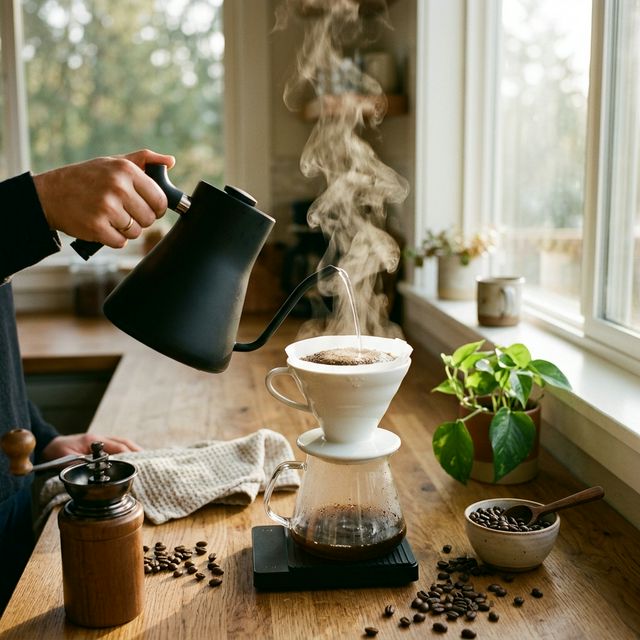
Table of Contents
Affiliate Disclosure: We may earn a commission if you purchase through our links. This doesn't affect our reviews.
Listing check: Amazon titles and photos change. Confirm the steel, length, and model named on this page match the listing before you buy — this is a research note from Nora Whitfield, not a copy of the Amazon product copy.
Buying your first tea kettle should be simple. A quick search instead turns up goosenecks, glass carafes, variable-temperature machines with LCD screens, and classic stovetop whistlers, at prices from around twenty dollars to well over a hundred. This guide cuts through all of that to a short list of genuinely beginner-friendly kettles: models that are safe, simple to operate, easy to clean, and forgiving of the small mistakes everyone makes in their first year of tea.
If you're kitting out a first kitchen from scratch, this pairs well with our beginner air fryer guide and our broader best electric kettles roundup for tea and coffee drinkers alike.
As an Amazon Associate we may earn a commission from qualifying purchases made through links on this page, at no extra cost to you.
How We Chose These Kettles
This is a research-based guide, not a hands-on test. We compared manufacturer specifications, recurring praise and complaints in verified owner reviews, and the conclusions of established expert roundups — including Wirecutter's electric kettle guide, Serious Eats' coverage of electric kettles and stovetop kettles, and Food Network's evaluated electric kettle picks. Every model below earned its place through a consistent pattern: straightforward operation, well-documented safety features, and durable materials — not gimmicks.
Electric vs. Stovetop: Which Should a Beginner Buy?
For most beginners, the answer is electric. A typical 1500-watt heating element brings water to a boil faster than most residential stovetop burners, and the heating base means the kettle switches itself off the moment the water is ready — Wirecutter's guide emphasizes exactly this combination of speed, safety, and cleanability. You get one-touch operation, no open flame or hot burner to forget about, and a kettle that keeps itself honest.
Stovetop kettles still earn a place in the right kitchen. They need no counter outlet, they have no electronics to fail, and they keep working during a power outage. The trade-offs are real, though: no auto shut-off (the whistle is your only alert), a fully hot exterior while in use, and generally slower boils. Serious Eats' stovetop kettle coverage treats sturdy construction and pour control as the deciding factors, which is the right lens if you go this route.
If you're unsure, start electric. It is the more forgiving format while you're still building habits.
The Safety Features That Matter Most
Three features separate a beginner-safe kettle from a liability, and Food Network's evaluations treat them as core criteria rather than luxuries:
- Auto shut-off. The kettle cuts power once the water reaches a boil, so walking away mid-boil has no consequences. This is the single most important feature for a beginner.
- Boil-dry protection. If the kettle is switched on with too little or no water inside, it shuts down instead of heating an empty vessel. It is what makes a distracted roommate harmless.
- A visible water level indicator. A marked window or a clear glass carafe tells you at a glance how much water you have, so you avoid both under-filling and messy overfills.
Treat the first two as non-negotiable on any electric kettle you buy. A cool-touch or well-insulated handle is a close fourth.
Our Picks for the Best Beginner Tea Kettles of 2026
Best Overall: Cuisinart PerfecTemp (CPK-17)
The PerfecTemp is the model expert roundups keep returning to — Wirecutter has long prioritized it for its presets and its track record for longevity. Its published specifications suit a beginner almost perfectly: a 1.7-liter capacity, a 1500-watt element, six one-touch temperature presets running from 160°F up to a full 212°F boil, and a keep-warm function that holds your set temperature for 30 minutes.
The presets are the real draw. Instead of guessing whether the water is too hot for green tea, you press the button labeled for it. The interface is a handful of large, clearly marked buttons — more than a boil-only kettle, but nothing you need a manual for. Owners consistently praise the water window and the fast heat-up; the most common complaints are aesthetic ones about the plastic accents, not functional ones.
Best Budget: Cosori Electric Glass Kettle
If you mostly drink black or herbal tea, you do not need presets — you need cheap, fast, and safe. Cosori's glass kettle delivers all three. The 1.7-liter carafe is borosilicate glass (so the water level is always visible and there is no plastic in contact with your water), it runs on a 1500-watt element, and it includes both auto shut-off and boil-dry protection. The wide-opening lid makes filling and cleaning genuinely easy, which Food Network's criteria — ease of filling, pouring, and cleaning — directly reward.
The limitation is straightforward: it boils, and that is all. For delicate green teas, let boiled water rest for a minute or two before pouring over the leaves. If Cosori's model is out of stock, the Mueller Ultra Kettle is a frequently recommended alternative in the same budget glass-kettle class.
Best Variable Temperature: OXO Brew Adjustable Temperature Kettle
A variable temperature tea kettle sits between boil-only simplicity and full preset machines: instead of fixed buttons, you dial in an exact target temperature and the kettle holds it. Food Network's roundup recommends both variable-temperature and simple models, and the OXO Brew is the version beginners tend to settle on because the dial-and-display interface requires no learning curve. The keep-warm function means a second cup minutes later doesn't mean a reboil.
Choose this if you know you'll brew greens, whites, or oolongs regularly and want to stop guessing. Skip it if your tea shelf is entirely black tea and chamomile — a boil-only kettle will serve you just as well for less money.
Best for Tea Drinkers Who Also Make Pour-Over: Fellow Stagg EKG
The Stagg EKG is the crossover pick. Serious Eats highlights the Fellow Stagg EKG and OXO's gooseneck models specifically for pouring precision — the slow, controlled stream that pour-over coffee demands. The 0.9-liter gooseneck spout gives you that same control for tea, and to-the-degree temperature setting with a 60-minute hold mode covers delicate teas comfortably.
Be honest with yourself before buying: this is a precision instrument at a premium price, with a smaller capacity than the other picks here. If your routine is a big mug of English breakfast, it is more kettle than you need. If a morning pour-over shares counter space with your tea ritual — especially alongside a decent grinder, which we cover separately in our pour-over burr grinder guide — it is the one kettle that does both jobs properly.
Best Stovetop: All-Clad Stainless Steel Whistling Kettle
If you prefer the stovetop route — no counter outlet, nothing electronic to fail, and a kettle that matches stainless cookware — All-Clad's whistling kettle is the dependable choice, with the fit, finish, and handle comfort that Serious Eats' stovetop testing identifies as what separates good stovetop kettles from frustrating ones.
Two beginner caveats. First, there is no auto shut-off: the whistle is your only reminder, so this format demands you stay in the kitchen. Second, the flat, smooth base needs full contact with your cooktop — that matters especially on glass-ceramic ranges, a topic we cover in detail in our glass-top stove cookware guide.
A Beginner's Temperature Cheat Sheet
If you drink mostly black or herbal tea, every kettle above will serve you identically, because boiling is correct. Temperature only becomes a feature when delicate teas enter the picture. Commonly recommended starting ranges look like this:
| Tea type | Water temperature (approx.) |
|---|---|
| Green | 160–180°F |
| White | 170–185°F |
| Oolong | 185–205°F |
| Black | 200–212°F |
| Herbal tisanes | 212°F (full boil) |
Ranges vary by tea vendor and by personal taste, so treat these as starting points to adjust from, not rules. With a boil-only kettle, letting boiled water rest for a minute or two brings it into green-tea territory — a perfectly good workaround while you decide whether temperature control is worth paying for.
Features You Can Skip as a Beginner
The kettle market has the same problem as the rest of the small-appliance aisle, which we document in our roundup of kitchen gadgets that waste money: feature creep. You can safely skip app-connected kettles, elaborate multi-stage brewing programs, and fashion-forward premium brands that charge for looks. Likewise, a 1.7-liter kettle is plenty for most households — solo drinkers may even prefer something smaller that cycles faster.
What is worth insisting on: auto shut-off, boil-dry protection, and honest materials. Interiors and contact points described as 304 food-grade stainless steel or borosilicate glass, plus a visible water level indicator, are the features that still matter five years from now.
Cleaning and Care Basics
Kettles ask very little of you. Descale every few weeks in hard-water areas by filling partway with a half-and-half mix of white vinegar and water, letting it sit for an hour, then rinsing thoroughly and boiling a fresh full pot of plain water once before use. Never submerge an electric kettle's base or heating plate — wipe it with a damp cloth instead. Emptying the kettle between uses keeps water from sitting stale, and it slows mineral buildup too. That is the entire maintenance routine.
Frequently Asked Questions
Are electric kettles safer than stovetop kettles for beginners?
Generally, yes. Auto shut-off and boil-dry protection mean an electric kettle tolerates being forgotten, while a stovetop kettle depends entirely on you responding to its whistle and remembering a hot burner. The electric format also keeps its heat contained in the base rather than on a flame or coil.
What capacity should a beginner get?
For one or two tea drinkers, roughly 1.0 to 1.7 liters is the sweet spot — enough for a pot plus a refill, without long heat-up times. The 0.9-liter gooseneck class is better suited to pour-over brewers working in single cups.
Do I really need variable temperature control?
Not for black or herbal tea, where a full boil is exactly right. For green, white, or oolong tea brewed regularly, temperature control noticeably improves results and convenience. When in doubt, start with a boil-only kettle and upgrade later — it is a cheap lesson either way.
Can I keep an electric kettle in a dorm?
Many dorms permit sealed electric kettles while prohibiting hot plates and open-coil burners, since there is no exposed heating element — but policies vary by campus, so confirm with your housing office first. A boil-only glass or stainless model with auto shut-off is the usual dorm-friendly choice.
The Bottom Line
For most beginners, the Cuisinart PerfecTemp CPK-17 is the pick that ends the search: fast, safe, and preset-equipped for every tea you're likely to explore. On a tight budget, Cosori's glass kettle covers the essentials. The OXO Brew Adjustable Temperature is the right upgrade for delicate-tea drinkers, the Fellow Stagg EKG earns its price only if pour-over coffee shares your counter, and All-Clad's whistling kettle suits the committed stovetop traditionalist. For a wider field of contenders beyond the beginner shortlist, our best electric kettles for tea and coffee roundup goes deeper.
Nora Whitfield
Writer, Kitchenware Authority
Nora Whitfield writes Kitchenware Authority's reviews and buying guides. Every knife, pan, and appliance is vetted against maker specifications, materials and safety documentation, and the long-run experience verified home cooks report — not first-hand lab tests.
Upgrade Your Kitchen Skills
Get research-based gear reviews, maintenance tips, and buying guides from the Kitchenware Authority desk.
No spam. Research notes from Nora Whitfield, not invented reader counts.