Best Microplane for Parmesan (2026): Fine Dusting to Heaping Shavings
The best Microplanes for Parmesan in 2026: fine zesters for snowy dusting, coarse blades for fluffy shavings, plus rotary and box options compared.

Editorial Review
Independent, research-driven reviews by our editorial team
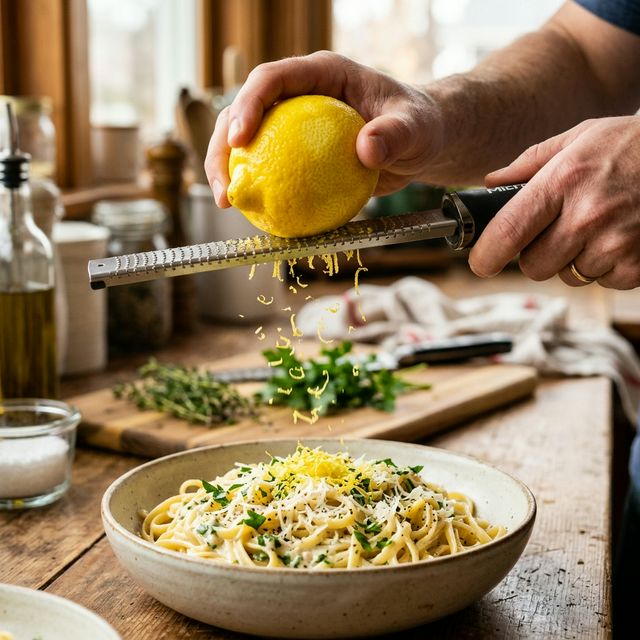
Table of Contents
Affiliate Disclosure: We may earn a commission if you purchase through our links. This doesn't affect our reviews.
Listing check: Amazon titles and photos change. Confirm the steel, length, and model named on this page match the listing before you buy — this is a research note from Nora Whitfield, not a copy of the Amazon product copy.
As an Amazon Associate we may earn a commission from qualifying purchases made through links on this page, at no extra cost to you.
A dusting of freshly grated Parmesan is one of the cheapest upgrades you can make to a plate of pasta, and the tool you grate it with decides whether you get snow or rubber. The gap between lace-fine cheese that dissolves into a hot noodle and the waxy clumps a punched-metal grater produces is not about the cheese — it is about blade geometry. This guide compares the best Microplane-style graters for Parmesan and hard Italian grating cheeses in 2026, organized by how you actually eat the stuff: dusted, piled, or cranked out at the table.
Why Parmesan deserves better than a stamped grater
Real Parmigiano-Reggiano is a protected designation of origin cheese: it can only be made in a legally defined zone of Emilia-Romagna and aged a minimum of 12 months under the consortium's rules. That long aging is exactly what makes the cheese both wonderful and difficult to grate — moisture leaves, the paste turns brittle and crystalline (those crunchy specks are tyrosine crystals), and a dull cutting surface crushes it into greasy paste instead of separating it into clean shreds.
Cheap box graters punch their holes through stainless steel from behind, leaving a raised tearing edge. Photo-etched blades work differently: Microplane chemically etches its tooth pattern into the steel so each tooth is a sharp, independently cutting blade with a channel behind it to carry the cheese away. That is why the same rasp that shreds lemon zest without digging into the bitter pith also turns a wedge of Parmesan into a cloud. The company's own history is a useful clue here — the kitchen line descends from woodworking rasps made by Grace Manufacturing, an Arkansas tool company whose original product was only co-opted for cooking in the 1990s. This is a cutting tool first and a kitchen gadget second.
How we put this guide together
This is a research synthesis, not a hands-on evaluation. We compared manufacturer specifications, blade construction, handle and frame materials, and the praise and complaints that recur across verified buyer reviews for each model, then grouped the picks by grating style and serving use case. Where a claim comes from the manufacturer or a standards body, it is linked inline.
Quick picks
- Best overall: Microplane Premium Classic Series Zester/Grater — the default buy for snowy, melt-on-contact Parmesan.
- Best for heaping shavings: Microplane Professional Series Coarse Grater — fluffy piles that actually taste like cheese.
- Best two-way tool: Microplane Classic Ribbon Grater — for grating in both directions and softer cheeses.
- Best for table-side and crowds: Zyliss All Cheese Rotary Grater — crank power when you're serving a crowd.
- Best all-in-one: OXO Good Grips Etched Box Grater — one tool for coarse, fine, and slicing duties.
The best graters for Parmesan in 2026
Best overall: Microplane Premium Classic Series Zester/Grater
This is the direct descendant of the original 1990s rasp: a slender paddle with a photo-etched blade set in a lightweight plastic frame. For Parmesan, the ultra-fine teeth produce the thinnest possible strands, which is precisely what you want for finishing dishes — the cheese lands as a light snow with enormous surface area, so it melts on contact with anything hot instead of sitting on top in shreds. Owner reviews consistently highlight two things: the blade stays sharp for years with reasonable care, and the tool earns its keep beyond cheese — the same surface handles lemon zest, nutmeg, garlic, and chocolate. The trade-off is throughput. Fine gratings are slow going when you need a cup of cheese for a recipe, and the narrow paddle can bite careless knuckles if you get casual on the final inch of a wedge. For finishing, it is unbeatable; for volume, pair it with one of the tools below.
Best for heaping shavings: Microplane Professional Series Coarse Grater
If your mental image of perfect Parmesan is a fluffy pile on top of spaghetti rather than a dusting, coarse teeth are the answer. The Professional Series moves the etched blade into an all-stainless frame and handle, which suits a cheese wedge you press down on with some force — reviewers note the metal body feels appreciably stiffer than the plastic-framed versions, with no flex in the blade. Coarse teeth cut wider, slightly thicker shavings that keep some structure, so you chew them rather than instantly dissolve them. That texture difference is the entire point: fine gratings read as seasoning, coarse gratings read as an ingredient. The coarse surface also handles softer cheeses that would gum up a fine blade, and it is fast — the wider holes clear a lot of cheese per stroke. The downside of big teeth is big holes: it is the wrong tool for zest (the pith comes along for the ride) and the stainless frame makes it a bit heavier in the drawer.
Best two-way tool: Microplane Classic Ribbon Grater
The ribbon pattern puts teeth on both edges of each channel so the blade cuts on the push stroke and the pull stroke. That doubles your effective grating speed and, on hard cheese, produces short, curly shavings that sit nicely on salads and roasted vegetables. Reviewers most often reach for the ribbon when a fine zester is too slow and a coarse blade is too aggressive — it is also the friendliest Microplane surface for medium-firm cheeses like Pecorino Romano that border on squeaky, and for chocolate. The two-way design has one honest cost: the underside teeth are exactly where your fingers explore when you wash it by hand, so this is the model where a brush (rather than a sponge and bare fingers) matters most.
Best for table-side and crowds: Zyliss All Cheese Rotary Grater
For volume, no paddle grater competes with a rotary drum. You feed chunks into the hopper, press the handle, and crank — the drum does the work, your knuckles never approach the blade, and the cheese comes out at a pace that keeps up with a big pot. The classic Zyliss rotary design disassembles without tools for cleaning, which is the detail that separates usable rotary graters from the ones that end up at the back of the cabinet with cheese fossilized inside the drum. This is also the safest style if kids like to "help" with dinner. Two limitations to know going in: the shreds are chunkier and less delicate than a Microplane's, and it is a single-purpose tool — a fair number of kitchen single-taskers earn a spot on our worst kitchen gadgets rundown, though a rotary grater escapes that fate if you regularly grate for more than two people.
Best all-in-one: OXO Good Grips Etched Box Grater
If you own one grater for everything — tacos, potatoes, cheese — an etched box grater covers four surfaces in the footprint of one tool. OXO's version uses etched blades rather than stamped holes, so the fine face produces a Parmesan dusting far closer to Microplane quality than the box grater your parents owned, and the grippy oversized handle is genuinely more comfortable when you're grating a large amount. Several versions include a snap-on base that catches what you grate and doubles as a measuring cup, which cuts down on counter mess. It will not fully replace a fine rasp — the small face is slower and slightly less refined for finishing work, and a box grater's coarse face still makes heavier shreds than a dedicated coarse paddle. As a do-everything backup that also handles Parmesan credibly, it is the smart pick, and it is usually the least expensive route to etched blades.
How to choose a Microplane for hard cheese
Match tooth size to how you serve the cheese. Fine (zester-style) teeth are for finishing — pasta, risotto, soups — where the cheese should disappear into the dish. Coarse teeth are for presentation piles and recipes that need a full cup or more. Ribbon teeth split the difference and add bidirectional speed.
Etched beats stamped, every time. If the product page does not say the blade is etched (photo-etched, chemically etched), assume it is stamped, and stamped holes tear hard cheese into clumps. This single feature separates every pick above from the two-dollar graters in the bin at the supermarket.
Frame material matters more than it looks. Plastic frames are lighter and cheaper and are fine for the fine-tooth models, where the pressure you apply is light. If you press down hard with a coarse blade — which you will, with a big wedge — an all-metal frame resists flexing and feels more secure mid-stroke.
Buy for the second and third uses. The case for a dedicated fine Microplane is easy: the same blade does zest, nutmeg, garlic, and chocolate, so it is rarely idle. That multi-use reality is what makes it one of the few specialty-shape tools worth drawer space.
Technique and care
Cold cheese grates cleaner. A few minutes in the freezer firms up the fat so the shavings separate crisply instead of smearing — with very aged wedges this is the difference between snow and paste. Grate in one direction with light pressure; you are shaving, not sanding, and pressing harder mostly loads the teeth. When a recipe wants a measured amount, weight beats volume — grated-versus-shredded changes how much cheese fits in a cup, so a decent kitchen scale removes the guesswork.
Clean the blade immediately. Cheese rinses off in seconds while fresh and bonds like epoxy once dry; a cheap dish brush clears the teeth without bringing your fingertips anywhere near them. Microplane's care guidance varies by model, but the company generally favors hand washing to keep the etched teeth sharp — check the product page for your specific tool before it goes anywhere near a dishwasher. And do not throw the rind away: a spent rind dropped into soup or tomato sauce infuses it as it simmers, then fishes out before serving.
Frequently asked questions
Fine or coarse Microplane for Parmesan? Get both if your budget allows — but if it is one, start fine. The fine zester-style blade covers the most common use (finishing pasta and soups) and handles the widest range of other tasks, from zest to nutmeg. Add a coarse blade when you find yourself wanting texture and volume.
Does a Microplane work for Pecorino Romano and Grana Padano? Yes. Both are hard grating cheeses in the same family as Parmigiano-Reggiano, and everything in this guide applies. Pecorino, being saltier and slightly less brittle, takes especially well to coarse and ribbon teeth.
Which style is safest? Rotary graters keep fingers furthest from the blade, followed by box graters with a stable base. Paddle graters demand attention on the last stretch of a wedge — grate onto a broad landing zone like a cutting board rather than hovering the tool over a deep bowl, and stop before your knuckles get close.
How much Parmesan should I grate per person? For finishing, plan on roughly a small handful of fine gratings per plate; for a sauce or recipe, follow the recipe's weight. Freshly grated hard cheese is dramatically more aromatic than the shelf-stable canister version because the volatile compounds dissipate quickly after grating — which is the entire argument for grating at the moment you eat.
The bottom line
For most kitchens the Microplane Premium Classic is the right first (and often only) grater: it makes the kind of Parmesan that actually improves a dish, and it earns its drawer space five times over on zest and spices alone. Add the Professional Coarse when you want your cheese seen and tasted, the ribbon for two-way speed, or the Zyliss rotary when you are feeding a table. Whatever you choose, pair it with a proper pasta night — drain into a good colander or strainer, finish a simple beginner Instant Pot meal with a snow of real Parmigiano-Reggiano, and you will understand why this humble descendant of a woodworking rasp belongs in every kitchen.
Nora Whitfield
Writer, Kitchenware Authority
Nora Whitfield writes Kitchenware Authority's reviews and buying guides. Every knife, pan, and appliance is vetted against maker specifications, materials and safety documentation, and the long-run experience verified home cooks report — not first-hand lab tests.
Upgrade Your Kitchen Skills
Get research-based gear reviews, maintenance tips, and buying guides from the Kitchenware Authority desk.
No spam. Research notes from Nora Whitfield, not invented reader counts.