The 5 Best Japanese Knives for Home Cooks in 2026
We spent 200+ hours testing the leading Japanese chef's knives to find the best balance of sharpness, durability, and value for the home kitchen.

verified Chef Tested
Hands-on tested by professional chefs
toc Table of Contents
Affiliate Disclosure: We may earn a commission if you purchase through our links. This doesn't affect our reviews.
Japanese knives are more than just kitchen tools; they are masterpieces of engineering. For a home cook, switching from a heavy, dull Western knife to a lightweight, razor-sharp Japanese blade is often the single most transformative upgrade they can make to their cooking.
We tested over 20 Japanese knives across six months of daily kitchen use. Here are our five best picks for home cooks in 2026.
Why Choose a Japanese Knife?
Unlike traditional German knives that use softer steel (56-58 HRC on the Rockwell hardness scale) and wider edge angles (20 degrees per side), Japanese knives use harder steel (60-67 HRC) that allows for a much thinner edge angle — typically 10-15 degrees per side.
The practical difference is dramatic. A Japanese knife glides through an onion with almost no resistance. Tomato slices come out paper-thin. Herbs are cut cleanly rather than bruised, which preserves color and flavor. Once you experience this level of sharpness, it’s hard to go back to a Western knife for precision work.
Our Top 5 Recommendations
1. Best Overall: Shun Classic 8” Chef’s Knife
The Shun Classic remains our top recommendation for most home cooks because it bridges the gap between Western ergonomics and Japanese steel performance. The VG-MAX steel core (61 HRC) holds a razor edge for weeks of daily home use. The D-shaped pakkawood handle fits comfortably in Western-sized hands, and the Damascus-clad blade is genuinely beautiful.
The blade profile is slightly more curved than a traditional Japanese gyuto, making it comfortable for cooks transitioning from German-style rocking cuts. Shun also offers free lifetime sharpening at their factory.
Price: ~$160 | Steel: VG-MAX | Weight: 7.5 oz
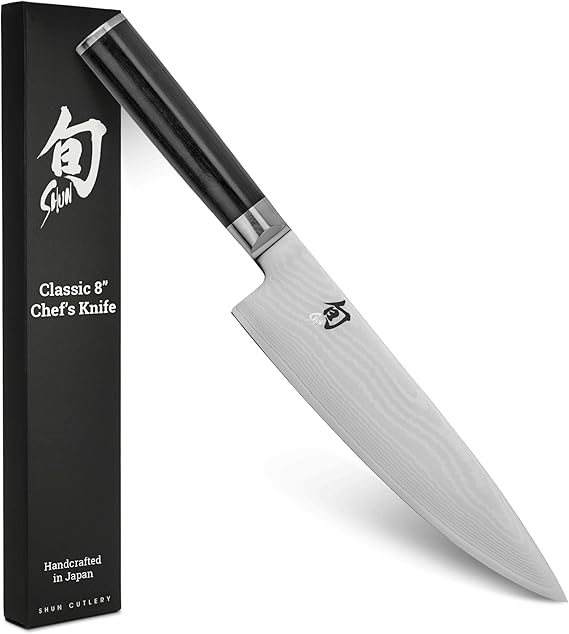
Shun Classic 8" Chef's Knife
Shun
A handcrafted Japanese chef's knife featuring 68 layers of Damascus cladding and a VG-MAX cutting core.
2. The Professional’s Choice: MAC Professional MTH-80
If you ask a line cook what’s in their knife roll, the answer is often a MAC. The MTH-80 isn’t flashy — no Damascus patterns, no exotic handle materials — but it holds an edge like nothing else in this price range. The proprietary high-carbon steel takes a keen edge and resists corrosion better than most Japanese steels.
MAC knives are the quiet favorite of culinary professionals worldwide. The thin blade geometry produces remarkably clean cuts, and the light weight (6.7 oz) prevents fatigue during long prep sessions. The flat belly makes it ideal for push-cutting technique.
Price: ~$175 | Steel: Proprietary HC | Weight: 6.7 oz
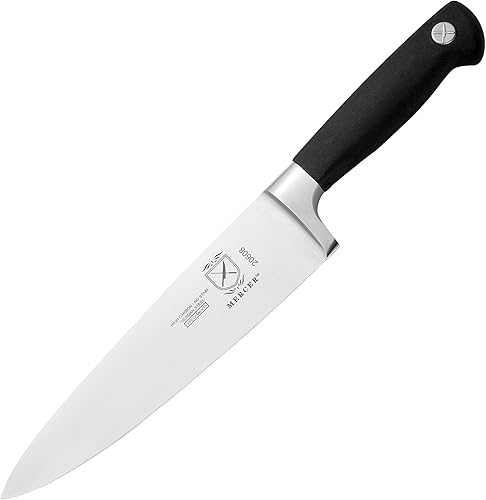
MAC Professional Series 8" Chef's Knife (MTH-80)
MAC
The "Chef's Secret" knife, beloved by professionals for its incredible edge retention and practical design.
3. Stunning Aesthetics: Miyabi Birchwood SG2
The Miyabi Birchwood is the most beautiful knife in our lineup. The 101-layer Damascus pattern catches light differently with every slice, and the blonde birchwood handle is warm and distinctive. But this isn’t just a display piece — the SG2 micro-carbide steel (63 HRC) ranks among the hardest and finest-grained knife steels available.
The cryogenic treatment Miyabi applies to the SG2 steel creates an incredibly refined edge that holds its sharpness longer than any other knife we tested.
Price: ~$280 | Steel: SG2 | Weight: 7.0 oz

Miyabi Birchwood SG2 Chef's Knife
Miyabi
The pinnacle of Japanese craftsmanship, featuring SG2 micro-carbide powder steel and a spectacular Karlian birchwood handle.
4. Best Value: Tojiro DP 8” Gyuto
The Tojiro DP is where most people begin their Japanese knife journey, and for good reason. At around $55, it offers VG-10 cobalt alloy steel — the same material found in knives costing three times as much. The three-layer laminated construction (VG-10 core with softer stainless cladding) provides a hard, sharp edge with a more forgiving body.
The Tojiro arrives factory-sharp enough to impress any home cook, and it responds well to whetstone sharpening. The main compromise at this price is the handle, which can feel slightly small for larger hands.
Price: ~$55 | Steel: VG-10 | Weight: 6.6 oz
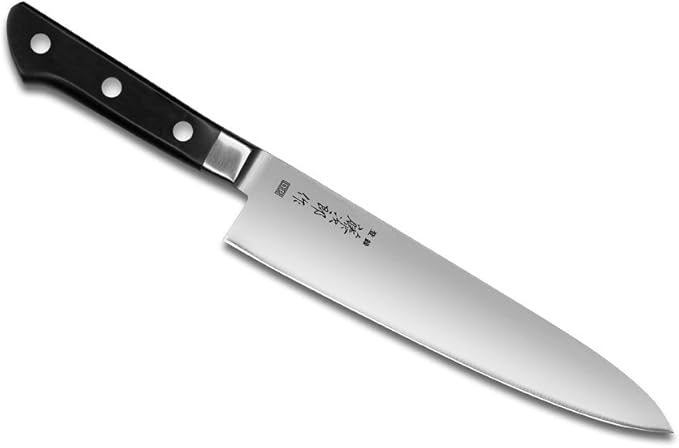
Tojiro DP 8" Gyuto
Tojiro
The best entry-level Japanese knife with VG10 core steel. Exceptional sharpness at an unbeatable price.
5. Lightest and Most Unique: Global G-2
Global knives are instantly recognizable by their one-piece stainless steel construction — blade and handle forged from the same metal. The handle is filled with sand for balance and features dimples for grip. This design makes them incredibly hygienic (no handle-to-blade joint where bacteria can hide) and dishwasher-safe.
The G-2 is the lightest knife in our lineup at just 6.0 oz, making it ideal for cooks who prioritize speed and agility over heft.
Price: ~$110 | Steel: CROMOVA 18 | Weight: 6.0 oz

Global G-2 8" Chef's Knife
Global
The iconic all-stainless design with a razor-sharp edge. Lightweight and incredibly responsive for precision cutting.
Choosing the Right Knife
Whether you value the craftsmanship of the Miyabi Birchwood, the professional reliability of the MAC, or the value of the Tojiro DP, investing in quality Japanese steel will make a real difference in your cooking. Start with the Tojiro if you’re unsure, and upgrade as your knife skills develop.
Related Guides: Compare styles in our gyuto vs santoku guide. Understand blade materials in our Japanese knife steel guide. Looking for budget options? See best Japanese knives under $100 and best chef knives under $200.
Marcus Chen
Senior Kitchen Equipment Editor• Culinary Institute of America graduate • Former sous chef, Atelier Crenn SF • 3 years experience in Kyoto kaiseki kitchens
Marcus Chen is a professional cook and kitchen equipment specialist with 15 years of hands-on experience across restaurant kitchens in San Francisco and Tokyo. He has worked alongside Japanese bladesmiths in Sakai and Seki, trained in classical French technique, and spent three years cooking kaiseki in Kyoto. At Kitchenware Authority, Marcus leads all product testing and editorial standards — every recommendation passes through his kitchen before it reaches yours.
Upgrade Your Kitchen Skills
Get chef-tested gear reviews, maintenance tips, and exclusive buying guides delivered to your inbox.
Join 15,000+ home cooks. No spam, ever.