Best Japanese Knives Under $100: Gyuto, Santoku, Petty Picks
The best Japanese knives under $100 start with the Tojiro DP Gyuto, but santoku, petty, MAC, and Global picks can be smarter depending on how you cook.

Table of Contents
Affiliate Disclosure: We may earn a commission if you purchase through our links. This doesn't affect our reviews.
Listing check: Amazon titles and photos change. Confirm the steel, length, and model named on this page match the listing before you buy — this is a research note from Nora Whitfield, not a copy of the Amazon product copy.
Affiliate Disclosure: Kitchenware Authority is an Amazon Associate. We earn from qualifying purchases at no extra cost to you. This helps support our independent research and chef-reviewed guides.
The best Japanese knife under $100 for most home cooks is the Tojiro DP Gyuto 210mm. It has the right shape for a first Japanese chef knife, a VG-10 core, stainless cladding, and a handle that feels familiar if you are coming from Wusthof, Victorinox, or Henckels.
This page now consolidates our older budget Japanese knife guide and the separate gyuto-only under-$100 article. Keeping one canonical page is cleaner for Google and easier for shoppers: if you want one all-purpose knife, start with the gyuto section; if you want a shorter vegetable knife, jump to the santoku; if you already own a chef knife, look at the petty or paring picks.
Quick answer: Buy the Tojiro DP Gyuto 210mm if you want one budget Japanese knife. Buy the Tojiro DP Santoku 170mm if you mostly cut vegetables. Add the Tojiro DP Petty 150mm when you want detail work that a full chef knife handles awkwardly.
Quick Picks
| Pick | Best for | Why it belongs here |
|---|---|---|
| Tojiro DP Gyuto 210mm | Best Japanese chef knife under $100 | True gyuto shape, VG-10 core, stainless cladding, and a beginner-friendly Western handle. |
| Tojiro DP Santoku 170mm | Best santoku under $100 | Shorter, flatter profile for vegetables, herbs, and compact cutting boards. |
| Tojiro DP Petty 150mm | Best utility knife | A precise companion for trimming, peeling, citrus, herbs, and small proteins. |
| MAC 6.5-inch Chef's Knife | Best compact chef knife | Light, nimble, and easier to manage for smaller hands or tight kitchens. |
| Global GS-38 Paring | Best paring knife | One-piece stainless design for peeling, coring, and in-hand prep. |
What You Give Up Under $100
Budget Japanese knives are not fake Japanese knives. The trade-offs are usually not the cutting edge itself. You give up polish: handle materials, spine rounding, perfect factory grinds, decorative cladding, and premium packaging. You can still get real performance if you buy from a maker that puts the money into steel and blade geometry.
That is why this list favors practical, stainless or semi-stainless knives over flashy Damascus patterns. A thin VG-10 Tojiro with a plain handle is more useful than a mystery-steel knife with a dramatic pattern and vague product copy.
1. Tojiro DP Gyuto 210mm: Best Overall
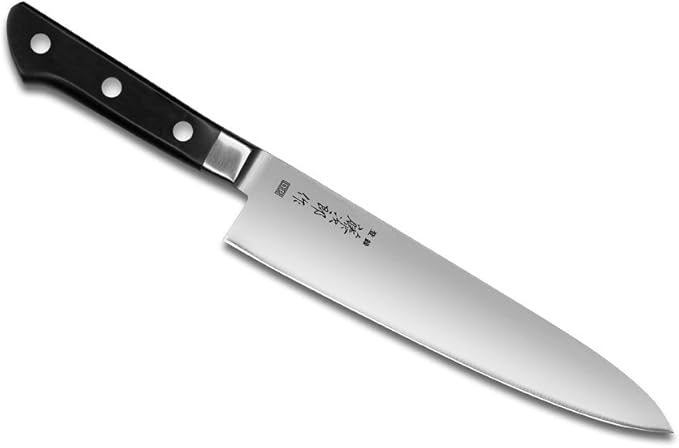
Tojiro DP 8" Gyuto
Tojiro
The best entry-level Japanese knife with VG10 core steel. Exceptional sharpness at an unbeatable price.
Tojiro DP Gyuto 210mm
The Tojiro DP Gyuto 210mm is the first knife most people should consider. Tojiro lists the current Classic chef-knife line with the F-808 210mm model, and its VG-10 material page identifies the Classic chef knife and Santoku models in the VG-10 family. That matters because VG-10 is the whole reason this knife has stayed popular: it takes a sharper edge than most entry-level Western stainless knives and holds that edge well for normal home prep.
The 210mm length is the sweet spot. It is long enough for onions, herbs, cabbage, boneless proteins, and larger vegetables, but it does not feel oversized on a home cutting board. The Western handle also makes the transition easier if this is your first Japanese chef knife.
Best for: one-knife buyers, first Japanese knife shoppers, and home cooks who want a thinner chef knife without jumping into fragile laser geometry.
Skip it if: you want a heavy rocking knife, cut through bones, or want a dishwasher-safe beater. This is a sharper tool, not a pry bar.
2. Tojiro DP Santoku 170mm: Best Vegetable Knife
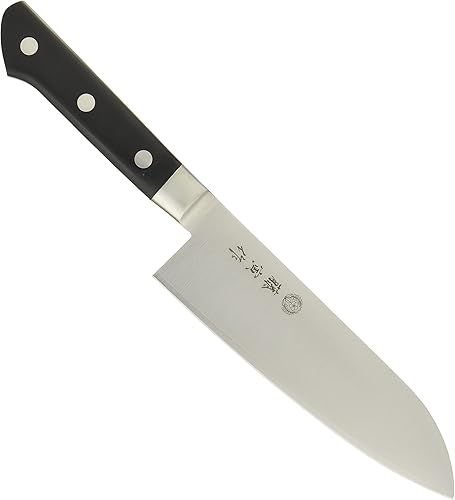
Tojiro F-503 7" Santoku
Tojiro
A great entry-level santoku with VG10 core. Perfect for home cooks wanting Japanese quality.
Tojiro DP Santoku 170mm
The Tojiro DP Santoku 170mm is the better pick if a full gyuto feels long or if your prep is mostly vegetables. The shorter blade is easier to control, the edge profile is flatter, and the wide blade makes it simple to scoop chopped onions, herbs, or mushrooms from the board.
The santoku is not less serious than the gyuto. It is just optimized differently. It gives up some length for slicing larger proteins, but it feels more natural for push cuts and short chopping motions.
Best for: vegetable-heavy cooking, smaller cutting boards, and cooks who want a compact Japanese knife rather than an all-purpose chef-knife replacement.
Skip it if: you regularly portion large roasts, melons, squash, or big bundles of herbs. The gyuto gives you more usable edge length.
3. Tojiro DP Petty 150mm: Best Utility Knife
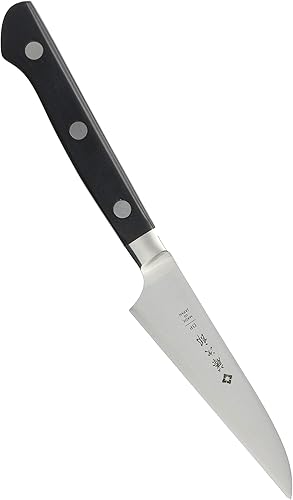
Tojiro DP 5.5" Petty
Tojiro
An excellent entry-level petty knife with VG10 core. Great for peeling and small prep tasks.
Tojiro DP Petty 150mm
The Tojiro DP Petty 150mm is the knife to add after your main gyuto or santoku. A petty is longer and slimmer than a Western paring knife, so it handles trimming chicken, slicing shallots, segmenting citrus, peeling fruit, and cleaning herbs without the awkwardness of a full chef knife.
If you already own a solid Western chef knife and want to try Japanese steel cheaply, the petty is also the least disruptive first purchase. It handles small precision tasks where thin geometry is easy to appreciate. For a ranked shortlist across price points, see our best petty knives guide.
Best for: detail work, citrus, herbs, small proteins, and cooks building a two-knife Japanese setup.
Skip it if: you only want one knife. A petty is a support knife, not a chef-knife substitute.
4. MAC 6.5-Inch Chef's Knife: Best Compact Chef Knife
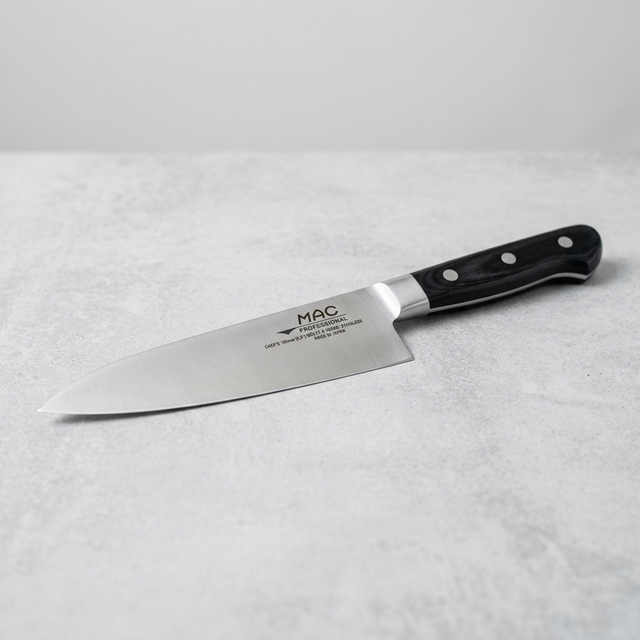
MAC Knife Professional 6.5" Chef's Knife
MAC
A compact chef's knife perfect for smaller hands. MAC's legendary sharpness in a smaller package.
MAC 6.5-Inch Chef's Knife
MAC is a good fit for cooks who want Japanese lightness without the fussier feel of harder, thinner gyutos. MAC's official HB-85 page describes an 8.5-inch chef knife as a light gyuto-style blade with a 2.0mm blade thickness; the smaller MAC chef knives follow the same practical idea: thin, light, and not overly decorative.
The compact 6.5-inch version makes the most sense for smaller hands, apartment kitchens, or cooks who do not like the reach of an 8-inch blade. It is also more forgiving than the thinnest Japanese gyutos. If fit is the whole buying question — handle, length, and weight — use the dedicated chef knife for small hands roundup instead of shopping only by brand.
Best for: smaller hands, tight boards, and cooks who want a lighter chef knife without obsessing over steel names.
Skip it if: you want a full-length gyuto for large vegetables and proteins.
5. Global GS-38 Paring Knife: Best Paring Knife
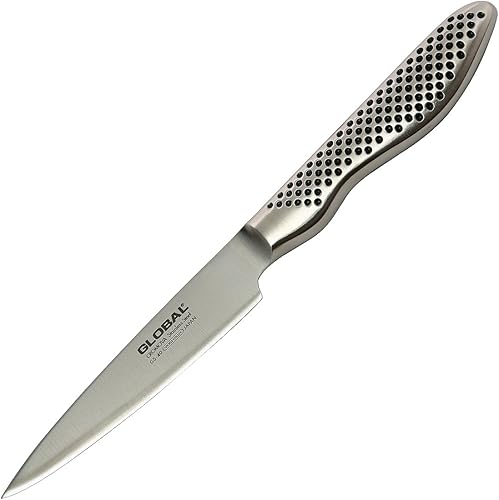
Global GS-38 3.5" Paring Knife
Global
A compact paring knife with Global's signature seamless design. Perfect for detail work and small tasks.
Global GS-38 3.5-Inch Paring Knife
The Global GS-38 is the outlier on this list because it is not a gyuto, santoku, or petty. It earns a spot because many cooks need a precise in-hand knife more than they need a second full-size blade. Global's official GS-38 page positions it as a small precision knife for peeling, slicing, and detail cuts.
Global's one-piece stainless construction is easy to clean and feels very different from wood-handled Japanese knives. Some people love the dimpled handle; some find it slippery when wet. If you can, handle one before buying.
Best for: peeling, coring, garnishes, small fruit, and in-hand work.
Skip it if: you want a board-work utility knife. The Tojiro petty is more versatile there.
Gyuto Vs Santoku Vs Petty
- Gyuto: best all-purpose Japanese chef knife. Choose this first if you want one knife.
- Santoku: shorter, flatter, and friendlier for vegetable-heavy prep.
- Petty: a support knife for precision tasks, not a main knife.
- Paring knife: best for in-hand peeling and coring, less useful for board work.
For a deeper profile comparison, see our gyuto vs santoku guide. If you want a dedicated vegetable knife after your main blade, read our nakiri knife guide. If you want to know what changes when you step up from budget Tojiro to premium Shun, use our Tojiro vs Shun comparison. If you want a broader shortlist beyond budget picks, use our best Japanese knives for home cooks.
Care Rules For Budget Japanese Knives
- Hand wash only. Dishwashers dull edges and damage handles.
- Dry immediately, even with stainless-clad knives.
- Use wood, rubber, or plastic boards. Avoid glass, stone, and ceramic.
- Do not twist through hard squash, frozen food, bones, or dense stems.
- Sharpen with whetstones or a ceramic rod. Avoid pull-through sharpeners.
- Store on a magnetic strip, in a saya, or with a blade guard.
These rules matter more with Japanese knives because the edge is thinner and usually harder. Better geometry is the point, but it rewards cleaner technique.
Sources Checked
- Tojiro chef knife / gyuto category
- Tojiro VG-10 material page
- MAC HB-85 official product specs
- Global GS-38 official product page
Final Verdict
The Tojiro DP Gyuto 210mm is the best Japanese knife under $100 for most buyers. It gives you the clearest upgrade over a budget Western chef knife without forcing you into a fragile specialty blade. Choose the Tojiro DP Santoku if you want a shorter vegetable-first knife, and add the Tojiro DP Petty when you are ready for a useful second blade.
Next Steps: Learn upkeep in our Japanese knife sharpening guide, compare steel names in our Japanese knife steel guide, add a vegetable specialist with our best nakiri knives guide, compare the Tojiro vs Shun upgrade path, or step up to our best chef knives under $200.
Nora Whitfield
Writer, Kitchenware Authority
Nora Whitfield writes Kitchenware Authority's reviews and buying guides. Every knife, pan, and appliance is vetted against maker specifications, materials and safety documentation, and the long-run experience verified home cooks report — not first-hand lab tests.
Upgrade Your Kitchen Skills
Get research-based gear reviews, maintenance tips, and buying guides from the Kitchenware Authority desk.
No spam. Research notes from Nora Whitfield, not invented reader counts.