Best Japanese Knife Steel: VG-10, SG2, Aogami & More
Best Japanese knife steel explained for home cooks: compare VG-10, VG-MAX, SG2/R2, Ginsan, White Steel, Blue Steel, and Aogami Super.

Editorial Review
Independent, research-driven reviews by our editorial team
Table of Contents
Affiliate Disclosure: We may earn a commission if you purchase through our links. This doesn't affect our reviews.
Listing check: Amazon titles and photos change. Confirm the steel, length, and model named on this page match the listing before you buy — this is a research note from Nora Whitfield, not a copy of the Amazon product copy.
The best Japanese knife steel for most home cooks is VG-10. It is stainless, sharpens without drama, holds an edge well, and appears in excellent knives from Tojiro, Shun, and other major makers. SG2/R2 is better for edge retention, while Aogami Super and White Steel are better for enthusiasts who enjoy carbon-steel care.
Quick answer: Choose VG-10 for your first Japanese knife, SG2/R2 for maximum stainless edge retention, Ginsan for easy sharpening with stainless convenience, and Aogami or White Steel only if you are willing to wipe, dry, and maintain carbon steel every time you cook.
Steel choice matters, but it is not magic. A well-sharpened VG-10 knife on a good board will outperform an expensive SG2 knife that has been abused, chipped, or left dull. Buy the steel that fits your habits.
Best Japanese Knife Steel: Quick Ranking
Japanese knife steel is the alloy and heat treatment used for the cutting core of a Japanese kitchen knife. It controls hardness, edge retention, sharpening feel, corrosion resistance, toughness, and price. The grind still matters, but steel sets the limits.
| Steel | Type | Typical HRC | Best for | Main tradeoff |
|---|---|---|---|---|
| VG-10 | Stainless | 60-61 | Most home cooks | Not as long-lasting as powder steel |
| VG-MAX | Stainless | 60-61 | Shun buyers | Proprietary, mostly found in Shun |
| SG2 / R2 | Powder stainless | 62-64 | Edge retention | Higher cost, more chip risk |
| Ginsan / Silver 3 | Stainless | 60-62 | Sharpening feel | Less common in US retail |
| AUS-10 | Stainless | 58-60 | Budget knives | Softer, shorter edge life |
| White Steel | Carbon | 61-65 | Pure sharpness | Rusts fast, needs care |
| Blue Steel | Carbon | 61-65 | Traditional performance | Patina/rust management |
| Aogami Super | Carbon | 64-67 | Enthusiasts | Hard, reactive, less forgiving |
If you want one rule, use this: buy stainless unless you already know you want carbon steel. Most bad Japanese knife experiences come from buying a reactive blade before building the habit of washing and drying immediately.
Stainless vs Carbon Steel
Stainless steel is the practical choice for most home cooks because it resists rust during normal prep. Carbon steel can sharpen more easily and take a very refined edge, but it reacts quickly to water, onions, citrus, tomatoes, and salty foods.
For most home cooks, stainless Japanese knives get used more often because they are lower friction. A VG-10 or SG2 gyuto can cut beautifully and still survive a busy dinner rush at home. Carbon steel is rewarding, but only if you enjoy the ritual.
Choose Stainless If
- You cook on weeknights and clean up later.
- Other people in the house may use your knives.
- You cut acidic foods often.
- You do not want patina or rust management.
- You are buying your first Japanese chef knife.
Choose Carbon Steel If
- You wipe and dry your knife during prep.
- You enjoy sharpening and maintenance.
- You want a traditional feel on stones.
- You already own stainless Japanese knives.
- You understand that patina is normal and rust is not.
VG-10: Best Japanese Knife Steel for Most Home Cooks
VG-10 is the best Japanese knife steel for most home cooks because it balances edge quality, stainless protection, sharpening ease, and price. It is hard enough to feel sharper than most Western knives but not so hard that every mistake becomes a chip.
VG-10 works especially well in a first gyuto. The steel can take a clean edge on a basic whetstone, and stainless cladding lowers daily maintenance. Tojiro DP is the classic value example — see Tojiro knives and the Tojiro DP gyuto page — while Shun uses related VG-family steels in more polished knives (Shun, Shun Classic 8-inch). For the practical buying decision, see our Tojiro vs Shun comparison. MAC's proprietary stainless in the MTH-80 is the thin-workhorse contrast (MAC brand).
Choose VG-10 if you want a Japanese knife that improves prep without changing your whole kitchen routine.
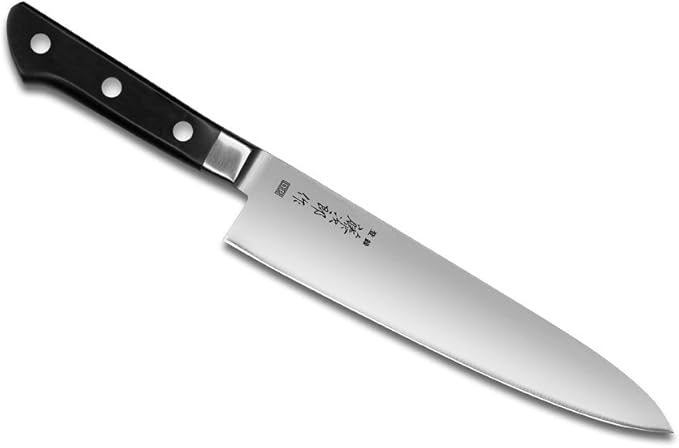
Tojiro DP 8" Gyuto
Tojiro
The best entry-level Japanese knife with VG10 core steel. Exceptional sharpness at an unbeatable price.
VG-MAX: Shun's Upgraded VG-10 Family Steel
VG-MAX is Shun's proprietary stainless steel used in lines such as Shun Classic. It sits in the same practical category as VG-10: stainless, sharp, and approachable for home cooks. Shun lists its Classic 8-inch chef knife with a VG-MAX core, Damascus cladding, and a 16-degree edge per side on the official Shun product page.
The real reason to buy VG-MAX is not the name alone. It is the full Shun package: consistent fit and finish, wide availability, warranty support, and a profile that feels familiar to cooks moving from German knives.
Choose VG-MAX if you want a polished premium knife rather than the cheapest path into Japanese steel.
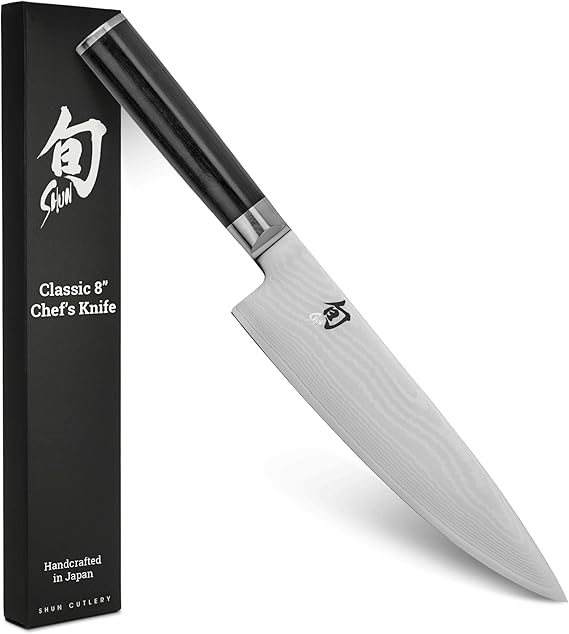
Shun Classic 8" Chef's Knife
Shun
A handcrafted Japanese chef's knife featuring 68 layers of Damascus cladding and a VG-MAX cutting core.
SG2 / R2: Best Stainless Steel for Edge Retention
SG2, also sold as R2, is the best Japanese knife steel for stainless edge retention. It is a powder-metallurgy steel, which means the alloy structure can be very fine and consistent. In practical terms, SG2 knives can be ground thin and hold a refined edge for a long time.
The tradeoff is brittleness and cost. At roughly 62-64 HRC, SG2 does not like twisting, prying, bones, frozen food, or careless board scraping. It rewards clean push cuts and good storage.
Choose SG2 if you already treat knives carefully and want a longer-lasting stainless edge. Do not choose it just because it sounds premium.

Miyabi Birchwood SG2 Chef's Knife
Miyabi
The pinnacle of Japanese craftsmanship, featuring SG2 micro-carbide powder steel and a spectacular Karelian birchwood handle.
Ginsan: Best Stainless Steel for Sharpening Feel
Ginsan, also called Silver 3, is a stainless steel that sharpens more like carbon steel than most stainless alloys. It is less common on mass-market US shelves, but Japanese knife enthusiasts like it because it feels clean and responsive on stones.
Ginsan is a strong choice if you want stainless convenience without the more stubborn sharpening feel of high-wear powder steels. It is not always the highest edge-retention choice, but it is satisfying to maintain.
Choose Ginsan if sharpening feel matters and you are comfortable shopping from specialty Japanese knife retailers.
AUS-10: Best Budget Stainless Option
AUS-10 is a good budget Japanese stainless steel. It is typically softer than VG-10 and SG2, so it will need sharpening more often, but it is also more forgiving. That makes it useful for entry-level knives and cooks who are still learning technique.
The problem is not AUS-10 itself. The problem is that some low-cost knives use Japanese steel names as marketing while hiding poor grind quality. If the blade is thick behind the edge, the steel will not save it.
Choose AUS-10 when the knife comes from a trustworthy maker and the price is meaningfully lower than VG-10.
White Steel: Sharpest Traditional Carbon Feel
White Steel, or Shirogami, is the traditional carbon-steel choice for cooks who prize sharpening feel and pure edge quality. It has fewer alloying elements than Blue Steel, so it sharpens quickly and can take an extremely keen edge.
The downside is maintenance. White Steel rusts quickly if neglected, and it usually has less wear resistance than Blue Steel or Aogami Super. That means it can feel amazing on stones but needs more frequent touch-ups.
Choose White Steel if you cook carefully, sharpen often, and want the traditional carbon experience.
Blue Steel and Aogami Super: Best Carbon Edge Retention
Blue Steel, or Aogami, adds alloying elements that improve wear resistance compared with White Steel. Aogami Super pushes that idea further with more carbon and alloy content, giving excellent edge retention at high hardness.
Aogami Super can be outstanding, but it is not beginner-friendly. At high hardness, the edge can chip if you twist through dense food or use a hard board. It also remains reactive, so you still need to wipe and dry it during prep.
Choose Aogami Super if you already know how to care for carbon steel and want long edge life in a traditional-feeling blade.
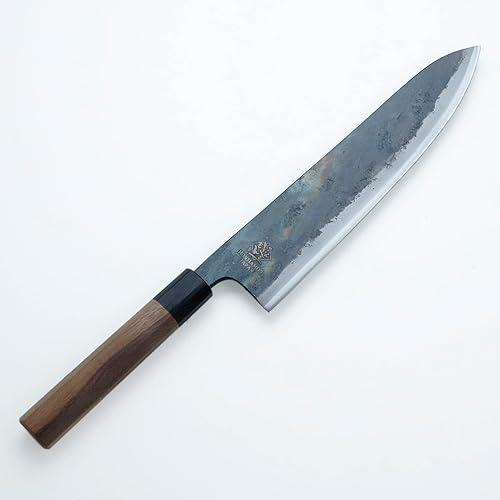
Kohetsu Aogami Super 8" Gyuto
Kohetsu
Hand-forged gyuto with premium Aogami Super steel. Exceptional edge retention with beautiful kurouchi finish.
Which Japanese Knife Steel Should You Buy?
The best steel depends on your habits more than your budget. Use this decision table before you buy.
| Your priority | Buy this steel | Why |
|---|---|---|
| First Japanese knife | VG-10 | Best balance of sharpness, care, and price |
| Premium but low-maintenance | VG-MAX or SG2 | Better finish and edge retention in stainless knives |
| Maximum stainless edge life | SG2/R2 | Powder steel holds a refined edge longer |
| Easy sharpening | Ginsan or White Steel | Cleaner stone feel |
| Traditional carbon experience | Blue #2 or White #2 | Patina, sharpness, easy sharpening |
| Enthusiast edge retention | Aogami Super | Hard carbon steel with long edge life |
| Shared family kitchen | VG-10 or AUS-10 | More forgiving and stainless |
For most readers, the answer is still VG-10. It gives you most of what makes Japanese knives appealing without demanding expert-level care.
Steel Is Only Half the Knife
Steel matters, but grind quality matters just as much. A thin, well-ground VG-10 knife will cut better than a thick SG2 knife. Handle comfort, balance, board choice, and sharpening habits also change the experience.
This is why our buying guides prioritize complete knives, not just steel names. If you want a chef-knife shortlist, start with our best Japanese chef knife guide. If you are shopping on a tighter budget, use our best Japanese knives under $100. If you already know you want a vegetable specialist, see our best nakiri knives guide.
Care Rules by Steel Type
Stainless Japanese knives are lower maintenance, but they are not maintenance-free. Carbon steel needs stricter habits. Use this as the baseline:
- VG-10 / VG-MAX: hand wash, dry, sharpen on whetstones, avoid bones.
- SG2 / R2: use a soft board, avoid twisting, store with edge protection.
- Ginsan: sharpen regularly; enjoy the easy stone feedback.
- White Steel: wipe during prep, dry immediately, expect patina.
- Blue Steel / Aogami Super: dry aggressively, oil for long storage, avoid hard impacts.
For sharpening technique, read our Japanese knife sharpening guide. For cutting surface choices, read our best cutting boards for Japanese knives.
Bottom Line
VG-10 is the best Japanese knife steel for most home cooks. SG2/R2 is the best stainless choice for edge retention. Ginsan is excellent if you care about sharpening feel. White Steel and Aogami are for cooks who want the carbon-steel experience and are willing to maintain it.
Do not buy the hardest steel first. Buy the steel you will actually care for.
Next Steps: Ready to buy? See our best Japanese chef knife guide, best Japanese knives under $100, Tojiro vs Shun comparison, best nakiri knives for vegetable prep, and gyuto vs santoku comparison.
Nora Whitfield
Writer, Kitchenware Authority
Nora Whitfield writes Kitchenware Authority's reviews and buying guides. Every knife, pan, and appliance is vetted against maker specifications, materials and safety documentation, and the long-run experience verified home cooks report — not first-hand lab tests.
Upgrade Your Kitchen Skills
Get research-based gear reviews, maintenance tips, and buying guides from the Kitchenware Authority desk.
No spam. Research notes from Nora Whitfield, not invented reader counts.