Gyuto vs Santoku: Which Japanese Knife Should You Buy?
An in-depth comparison of the two most popular Japanese kitchen knives. We break down blade geometry, ideal uses, and which one suits your cooking style.

verified Chef Tested
Hands-on tested by professional chefs
toc Table of Contents
Affiliate Disclosure: We may earn a commission if you purchase through our links. This doesn't affect our reviews.
If you’re shopping for your first serious Japanese knife, you’ll inevitably face this question: Gyuto or Santoku? Both are all-purpose workhorses, both are lighter and sharper than their Western counterparts, and both will transform the way you prep food. But they’re not interchangeable.
This guide breaks down the real differences so you can make a confident choice.
At a Glance
| Feature | Gyuto | Santoku |
|---|---|---|
| Blade Length | 210-270mm (8-10.5”) | 165-180mm (6.5-7”) |
| Profile | Curved belly, pointed tip | Flatter edge, sheepsfoot tip |
| Cutting Motion | Rock-chopping and slicing | Push-cutting and chopping |
| Best For | Versatile all-purpose, proteins | Vegetables, precise dicing |
| Weight | Slightly heavier | Lighter, more compact |
| Origin | Japanese adaptation of French chef’s knife | Traditional Japanese design |
The Gyuto: The Versatile All-Rounder
The Gyuto (literally “beef sword”) is Japan’s answer to the French chef’s knife. It has a pronounced curved belly that lets you rock the blade through herbs, a pointed tip for detail work, and enough length to glide through large cuts of protein with a single pull.
Why Choose a Gyuto
- Longer blade gives you more surface for slicing, and the curve supports a rocking motion that Western-trained cooks find intuitive.
- Pointed tip is excellent for scoring, trimming fat, and precise cuts around bones.
- More versatile for mixed cooking styles — rock-chop, push-cut, or slice.
- Professional standard , if you watch any kitchen brigade, Gyutos dominate the line.
Our Top Gyuto Pick
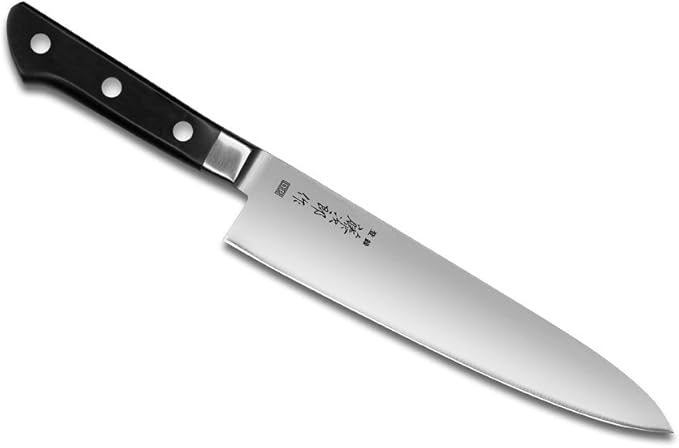
Tojiro DP 8" Gyuto
Tojiro
The best entry-level Japanese knife with VG10 core steel. Exceptional sharpness at an unbeatable price.
Tojiro DP 210mm Gyuto
~$70
The Tojiro DP 210mm is the standard recommendation for your first quality Gyuto. At under $60, the VG-10 core steel delivers a razor edge, and the simple western handle keeps the learning curve gentle. For an upgrade, the MAC MTH-80 is a professional-grade option that will last a lifetime.
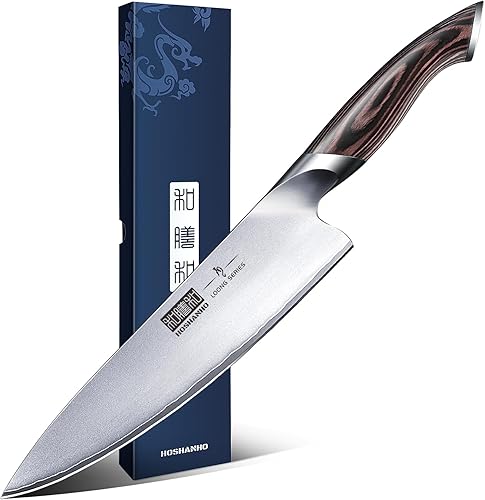
MAC Professional MTH-80 8" Chef's Knife
MAC
Widely considered the best value in Japanese chef's knives, with exceptional sharpness and professional-grade performance.
MAC MTH-80 Chef's Knife
~$175
The Santoku: The Precision Specialist
The Santoku (“three virtues”) earned its name from its ability to handle three primary kitchen tasks: slicing, dicing, and mincing. Its flatter profile, shorter length, and wider blade make it exceptionally nimble for vegetable-forward prep.
Why Choose a Santoku
- Flatter edge makes push-cutting and up-down chopping effortless , ideal for rapid mincing of garlic, shallots, and herbs.
- Wider blade works as a built-in bench scraper for scooping diced ingredients off the board.
- Shorter length feels less intimidating and offers better control in tight spaces.
- Lighter weight reduces hand fatigue during long vegetable prep sessions.
Our Top Santoku Pick
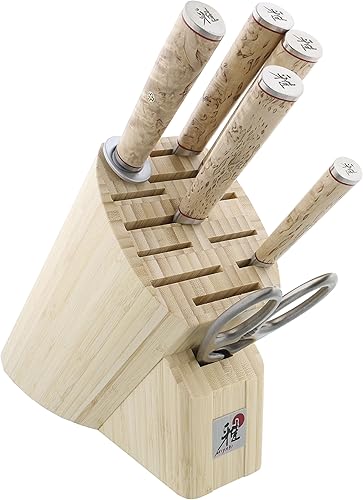
Miyabi Birchwood SG2 7" Santoku
Miyabi
A premium santoku with SG2 micro-carbide steel and stunning Karelian birch handle. Beautiful and incredibly sharp.
Miyabi Birchwood SG2 Santoku
~$300
The Miyabi Birchwood SG2 Santoku is our top-tier choice , the SG2 micro-carbide steel holds an edge like few other production knives, and the birchwood handle is a standout. For a budget option, the Tojiro DP Santoku offers 80% of the performance at a fraction of the price.
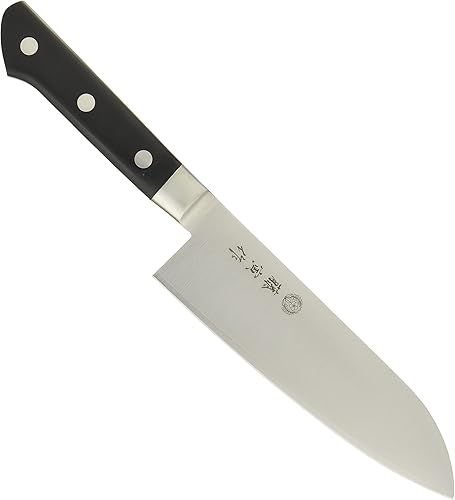
Tojiro F-503 7" Santoku
Tojiro
A great entry-level santoku with VG10 core. Perfect for home cooks wanting Japanese quality.
Tojiro DP 170mm Santoku
~$60
How We Tested
We used each knife daily for two weeks across a range of common home-cooking tasks:
- Vegetables , Dicing onions (100 per knife), mincing garlic, julienning carrots, chiffonading basil
- Proteins , Breaking down whole chickens, slicing raw fish for sashimi, portioning steaks
- Herbs , Fine-mincing parsley, cilantro, and chives (checking for bruising vs. clean cuts)
- Edge retention , Paper-cut test after every 2 days of use without sharpening
- Comfort , Rating fatigue after 30-minute continuous prep sessions
The Verdict: Which Should You Buy?
Choose the Gyuto if: You want one knife that does everything. You cook proteins regularly. You already use a rocking motion. You prefer a longer blade.
Choose the Santoku if: You cook mostly vegetables. You prefer push-cutting. You have smaller hands or a smaller cutting board. You want something that feels immediately comfortable.
For most home cooks who are buying their first Japanese knife, we recommend the Gyuto. It’s the more versatile choice, and once you adapt to the length, you’ll appreciate the extra reach. But if your cooking is primarily vegetable-based, the Santoku is the better-optimized tool.
Either way, you’re making a massive upgrade from any standard Western knife.
Related Guides: If you’re new to Japanese knives, start with our guide to choosing your first chef knife. For steel comparisons, see our Japanese knife steel guide. And if you’re comparing specific brands, check out Shun vs Miyabi.
Final Verdict: Which Should You Buy?
If you cook meat, fish, and large vegetables regularly, get a gyuto first. The extra length makes rocking cuts and protein breakdown easier. If your meals center around vegetables, stir-fries, and precise dice work, the santoku is more efficient. Many serious home cooks eventually own both, using the gyuto as their primary workhorse and reaching for the santoku when prepping vegetables for weeknight meals. The best starting point for most cooks? A 210mm gyuto. It handles nearly everything.
Marcus Chen
Senior Kitchen Equipment Editor• Culinary Institute of America graduate • Former sous chef, Atelier Crenn SF • 3 years experience in Kyoto kaiseki kitchens
Marcus Chen is a professional cook and kitchen equipment specialist with 15 years of hands-on experience across restaurant kitchens in San Francisco and Tokyo. He has worked alongside Japanese bladesmiths in Sakai and Seki, trained in classical French technique, and spent three years cooking kaiseki in Kyoto. At Kitchenware Authority, Marcus leads all product testing and editorial standards — every recommendation passes through his kitchen before it reaches yours.
Upgrade Your Kitchen Skills
Get chef-tested gear reviews, maintenance tips, and exclusive buying guides delivered to your inbox.
Join 15,000+ home cooks. No spam, ever.