Shun vs Miyabi: Which Japanese Knife Brand Is Better?
A source-checked Shun vs Miyabi comparison covering steel, edge geometry, handle design, maintenance, and which premium Japanese knife brand is the better buy.

Editorial Review
Independent, research-driven reviews by our editorial team
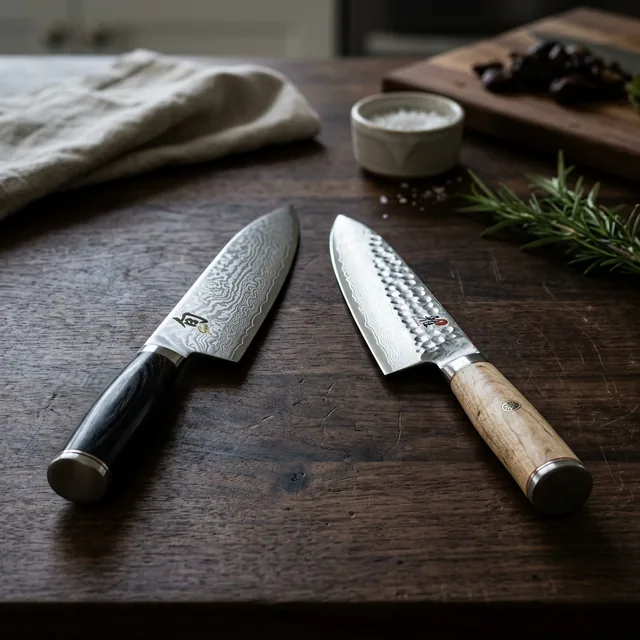
Table of Contents
Affiliate Disclosure: We may earn a commission if you purchase through our links. This doesn't affect our reviews.
Listing check: Amazon titles and photos change. Confirm the steel, length, and model named on this page match the listing before you buy — this is a research note from Nora Whitfield, not a copy of the Amazon product copy.
Shun and Miyabi are two of the most recognizable Japanese knife brands sold in the U.S. Both have serious Japanese manufacturing behind them, both make beautiful knives, and both can be a meaningful upgrade from a thick German-style chef's knife.
The difference is not just branding. Shun tends to be the more practical buy: easier to find, easier to gift, and a little more forgiving for everyday cooking. Miyabi tends to chase a harder, finer, more jewel-like knife, especially in the Birchwood SG2 line.
Quick Verdict
Buy Shun Classic if you want the safest first premium Japanese knife. It uses VG-MAX steel at about 60-61 HRC, has a familiar 8-inch chef's knife shape, and is easier to recommend to a wide range of home cooks.
Buy Miyabi Birchwood SG2 if you value edge retention and finish over practicality. Its SG2/MC63 powder steel is harder, the blade is visually striking, and the edge feel is more enthusiast-oriented, but it asks for more careful handling.
For a broader shortlist by budget, see our best Japanese knives for home cooks. If this is your first Japanese knife, read how to choose your first chef's knife before spending premium money. If the real choice is value versus premium, compare Tojiro vs Shun before jumping straight to Miyabi.
Brand Overview
| Shun | Miyabi | |
|---|---|---|
| Parent company | KAI Group | Zwilling J.A. Henckels |
| Major production location | Seki, Japan | Seki, Japan |
| Best-known steel here | VG-MAX | SG2/MC63 micro-carbide powder steel |
| Typical hardness | About 60-61 HRC on Shun Classic | About 63 HRC on Birchwood SG2 |
| Edge angle | About 16 degrees per side on Classic/Premier | Very acute Honbazuke edge on many Miyabi lines |
| Handle feel | Shun Classic has a D-shaped PakkaWood handle; Premier is more ambidextrous | Birchwood uses a D-shaped Karelian birch handle; other lines vary |
| Best fit | First premium Japanese knife, gifts, daily home cooking | Enthusiasts, careful cooks, edge-retention shoppers |
Steel: The Core Difference
Shun's VG-MAX is a stainless cutting core used in the Classic and Premier lines. On the Classic 8-inch chef's knife, retailer spec sheets list a VG-MAX core, 34 layers of Damascus cladding on each side, about 60-61 HRC hardness, and a 16-degree double-bevel edge. That combination is sharp enough to feel distinctly Japanese while staying more forgiving than many harder powder steels.
Miyabi's Birchwood SG2/MC63 is a harder micro-carbide powder steel. Zwilling lists the Birchwood line with an MC63 core, 100 surrounding layers of steel, and a Rockwell hardness around 63 HRC. In practical terms, that means a fine edge that should stay crisp longer, but it also means you need better habits.
The simple version: Shun is easier to live with. Miyabi can feel more special when used correctly.
Head-to-Head: Chef's Knife
Shun Classic 8-inch Chef's Knife
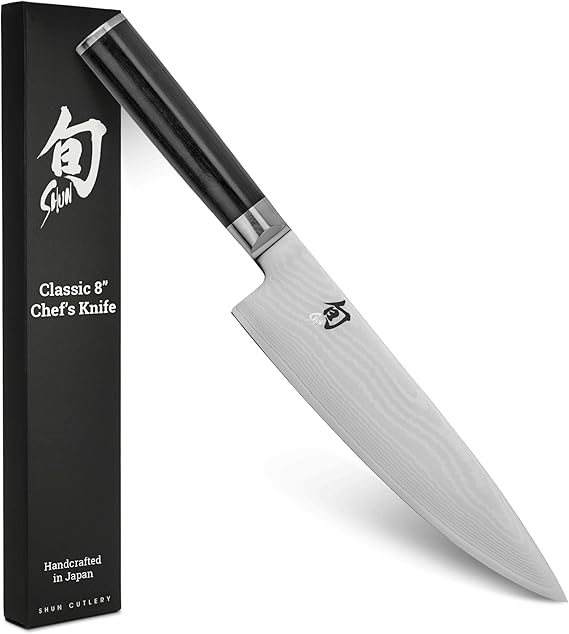
Shun Classic 8" Chef's Knife
Shun
A handcrafted Japanese chef's knife featuring 68 layers of Damascus cladding and a VG-MAX cutting core.
Check current Shun Classic 8-inch price
The Shun Classic is the safer recommendation for most home cooks. The D-shaped PakkaWood handle gives it a traditional feel, the Damascus cladding looks premium without turning the knife into a display-only object, and the VG-MAX edge is sharp while still realistic for weeknight prep.
It is not a beater knife. Use a wood or synthetic board, wash by hand, dry immediately, and avoid hard squash stems, bones, frozen foods, and twisting cuts. For board pairing, our Japanese knife cutting board guide is worth reading.
Miyabi Birchwood SG2 8-inch Chef's Knife

Miyabi Birchwood SG2 Chef's Knife
Miyabi
The pinnacle of Japanese craftsmanship, featuring SG2 micro-carbide powder steel and a spectacular Karelian birchwood handle.
Check current Miyabi Birchwood SG2 price
The Miyabi Birchwood SG2 is the more premium-feeling knife. The SG2/MC63 core, flower Damascus construction, and Karelian birch handle make it feel closer to an enthusiast purchase than a default kitchen tool.
That does not automatically make it better for everyone. If you are rough with knives, share them with people who might use glass boards, or want the easiest warranty/service experience, Shun is usually the better practical choice. If you keep your edge maintained and want longer edge retention, Miyabi has the stronger performance argument.
Chef's Knife Verdict
Shun Classic wins for most first-time premium knife buyers. It is easier to recommend, easier to replace, and less demanding day to day.
Miyabi Birchwood SG2 wins for careful cooks chasing edge retention. It is the more exciting knife, but the harder steel and premium handle make careful ownership more important.
Handle Design
Shun Classic uses a D-shaped PakkaWood handle. It feels traditional and controlled, though some left-handed cooks prefer the Premier line because its contoured PakkaWood handle is more ambidextrous.
Miyabi varies more by line. The Birchwood SG2 handle is not just a generic Western handle; it is a D-shaped Karelian birch handle with a decorative end cap. Kaizen II and other lines feel different again, so handle preference should be checked model by model.
If you cannot hold both before buying, choose by tolerance for risk: Shun Classic is the safer online purchase; Miyabi Birchwood is the more distinctive one.
Value Comparison
| Model | Steel | Hardness | Best value read |
|---|---|---|---|
| Shun Classic 8-inch chef's knife | VG-MAX | About 60-61 HRC | Best first premium Japanese chef's knife |
| Shun Kanso 8-inch gyuto | AUS10A | About 60 HRC | Better if you want simpler looks and lower cost |
| Miyabi Birchwood SG2 8-inch chef's knife | SG2/MC63 | About 63 HRC | Best premium edge-retention pick |
| Miyabi Kaizen II 8-inch gyuto | FC61 | About 61 HRC | Better value Miyabi entry point |
We intentionally avoid fixed price calls here because Amazon and retailer pricing moves constantly. Use current price, return policy, and warranty/service access as the final tiebreakers.
Who Should Buy Shun?
Buy Shun if you:
- Want a safe first premium Japanese chef's knife
- Prefer easier availability and a broader product lineup
- Like the Classic line's traditional D-shaped handle
- Want VG-MAX sharpness without jumping straight to harder powder steel
- Care about factory sharpening and service support
The Classic 8-inch chef's knife is the obvious start. The Premier santoku is a better fit if you mostly prep vegetables and prefer a more ambidextrous handle. For a head-to-head on a dedicated Shun vegetable knife versus Tojiro's, see our Tojiro vs Shun nakiri comparison.
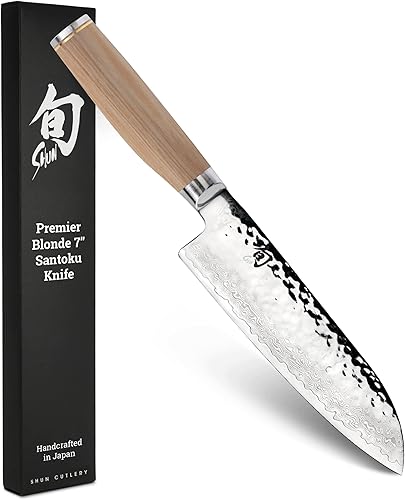
Shun Premier 7" Santoku
Shun
Hand-hammered tsuchime finish, VG-MAX steel at 60-61 HRC, 68-layer Damascus, 16-degree edge. The Premier line's handle works for both right- and left-handed cooks.
Who Should Buy Miyabi?
Buy Miyabi if you:
- Prioritize edge retention and a fine cutting feel
- Want SG2/MC63 powder steel in the Birchwood line
- Prefer a more premium, gift-worthy finish
- Already use proper cutting boards and hand-wash knives
- Do not mind paying more for materials and presentation
The Birchwood chef's knife is the showcase piece. The Birchwood santoku makes sense if you want the same premium steel in a shorter, vegetable-friendly shape.
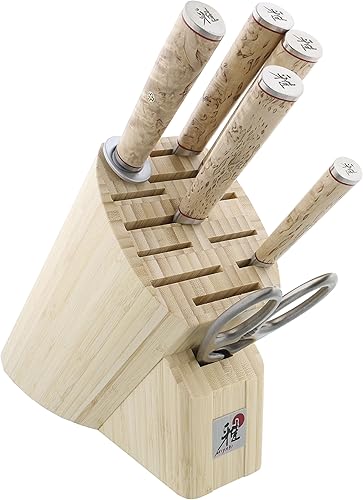
Miyabi Birchwood SG2 7" Santoku
Miyabi
A premium santoku with SG2 micro-carbide steel and stunning Karelian birch handle. Beautiful and incredibly sharp.
Maintenance Differences
Both brands need Japanese-knife habits: hand wash, dry immediately, avoid the dishwasher, and use a wood or quality synthetic board. A ceramic honing rod can help between sharpenings, but do not treat these like thick German knives.
Harder Miyabi SG2/MC63 should hold a crisp edge longer, but it is less tolerant of twisting and impact. Shun VG-MAX is still a hard Japanese stainless steel, but it is the more forgiving everyday choice.
When the edge needs real work, use a whetstone or a qualified sharpener. Our Japanese knife sharpening guide walks through the basic process.
Final Verdict
For most home cooks, Shun Classic is the better all-around buy. It gives you the Japanese knife experience without asking quite as much from the owner.
For enthusiasts and careful cooks, Miyabi Birchwood SG2 is the better performance knife. The harder powder steel and premium construction make it feel more special, especially if you already know how to maintain thin Japanese edges.
You can be happy with either brand. The right choice is the one that matches your habits, not the one with the prettiest spec sheet.
Sources Checked
- Zwilling: Miyabi Birchwood SG2 5000MCD
- Zwilling: Miyabi Birchwood SG2 8-inch chef's knife
- Cutlery and More: Shun Classic 8-inch chef's knife specs
- Zwilling warranty information
More comparisons: See our Tojiro vs Shun value comparison, best Japanese knives roundup, gyuto vs santoku guide, best nakiri knives for vegetable prep, and Japanese knife steel guide.
Nora Whitfield
Writer, Kitchenware Authority
Nora Whitfield writes Kitchenware Authority's reviews and buying guides. Every knife, pan, and appliance is vetted against maker specifications, materials and safety documentation, and the long-run experience verified home cooks report — not first-hand lab tests.
Upgrade Your Kitchen Skills
Get research-based gear reviews, maintenance tips, and buying guides from the Kitchenware Authority desk.
No spam. Research notes from Nora Whitfield, not invented reader counts.